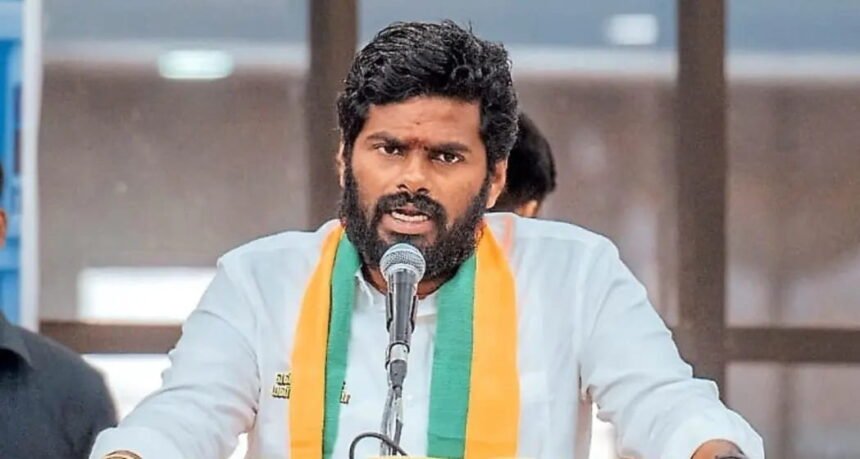
Former BJP leader K. Annamalai, who left the national party earlier this week, announced the launch of a “political movement” on Friday (June 5, 2026). This movement draws significant inspiration from the ideals of former President A.P.J. Abdul Kalam. Hours before his announcement, the BJP stated that its national president, Nitin Nabin, had accepted Mr. Annamalai’s resignation from the party’s primary membership.
Sharing the vision for his new political movement via social media, Mr. Annamalai stated that it would evolve into a political party when the time was right. Its office-bearers will undergo training at the ‘Dr. A.P.J. Abdul Kalam Centre for Ethics and Politics’ in Coimbatore. He emphasised that all office-bearers would receive training at this center before contesting any election.
Annamalai Makkal Iyakkam Gains Momentum
Annamalai, recognised for his energetic campaigning and robust public persona, unveiled a new people-focused political movement via the ‘Annamalai Makkal Iyakkam’ (AMI) and ‘We the Leaders Foundation‘. The initiative is supported by the website ‘wetheleader.org’ and carries the slogan: “Let us move forward, take action, and bring about change.”
In his resignation letter to the BJP national president, Annamalai acknowledged the inspiration he drew from Prime Minister Narendra Modi’s leadership, which had prompted him to join the BJP six years ago. He appreciated the party’s trust in entrusting him with significant responsibilities early in his political career, while also expressing his disagreements with other party members.
Annamalai stated that he attempted to change the nature of political discourse in Tamil Nadu, but stale, clichéd narratives weighed down the process, and he faced repeated internal and external obstacles. He said, “I recall numerous conversations with the top leadership and the disagreements that have surfaced over the past 18 months.
I do not wish to burden the top leadership further with my ideas regarding a brand of politics in Tamil Nadu that is development-oriented and rooted in culture. After discussions with our senior leadership, I have concluded that our visions for Tamil Nadu do not align.”