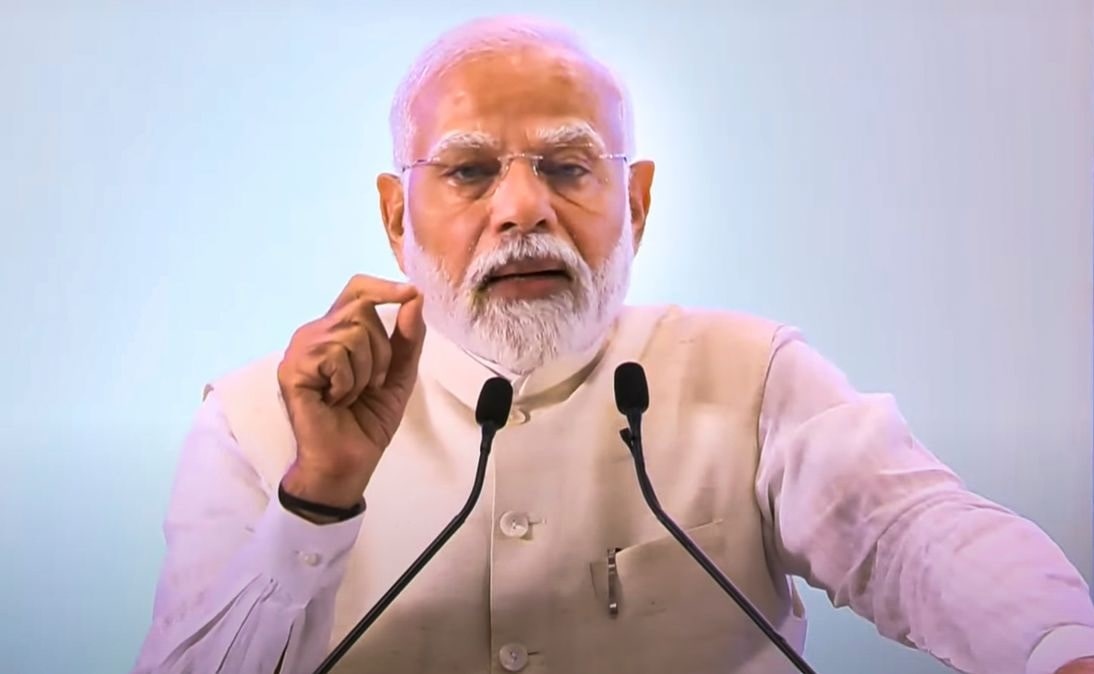
‘Fast Track’ Courts for NEET Paper Leaks: Prime Minister Narendra Modi’s call for the establishment of dedicated fast-track courts to hear NEET paper leak cases reignites the debate regarding the judiciary’s capacity for speedy justice delivery and draws attention to the performance of such courts in recent years.
PM Modi’s statement comes amidst nationwide protests. These demonstrations are being spearheaded by the ‘Cockroach Janata Party‘ (CJP) and are supported by several opposition parties, including the Aam Aadmi Party, Congress, and Shiv Sena (UBT).
However, the question remains as to how the government would establish such courts, given that most existing fast-track courts primarily handle cases related to sexual offenses. As this debate unfolds, it is pertinent to examine the evolution of the fast-track court (FTC) system in India.
Former Law Secretary P.K. Malhotra states that the nature of these fast-track courts would depend on the specific scheme the government intends to implement, much like the existing FTC scheme for sexual assault cases.
“We have a concept of special courts, which are mentioned in various laws. For instance, there are special courts for CBI cases and for economic offenses. However, provisions for these special courts are embedded within the specific legislation governing them. But under which law would cases involving paper leaks, and specifically the NEET exam, fall? If they are brought under a specific law, then perhaps special courts could be established for them, P.K. Malhotra told The Indian Express.
Emphasising the need for “timely justice” through such courts, he suggests that experts from relevant fields could be brought in to specifically handle these cases. He notes, “Therefore, the benefits of this cannot be underestimated. However, the specific procedure the government adopts, particularly for these paper-leak cases, will depend on the plan it ultimately presents.”
According to Malhotra, it will depend on whether these cases are handled within the administrative framework of the fast-track special courts established for rape or POCSO cases, or if entirely new special courts are created, a move that might require legislative changes. He adds, “It will depend on the government’s final decision. But yes, in terms of addressing the demands of the protesting students, I believe the Prime Minister’s statement is positive. However, let us wait for further details.”