Trump Administration: The US Department of Homeland Security (DHS) has proposed raising the fee for certain H-1B visa petitions to $103,265. This proposal, posted in the Federal Register on Monday, would formalise the controversial $100,000 H-1B payment requirement introduced by the Donald Trump administration last year into a permanent rule.
The proposed rule will now undergo a 30-day public comment period, after which the DHS could finalise it by the end of the year. This move comes amid growing uncertainty surrounding the H-1B program, particularly for Indian professionals, who make up the largest group of H-1B visa holders.
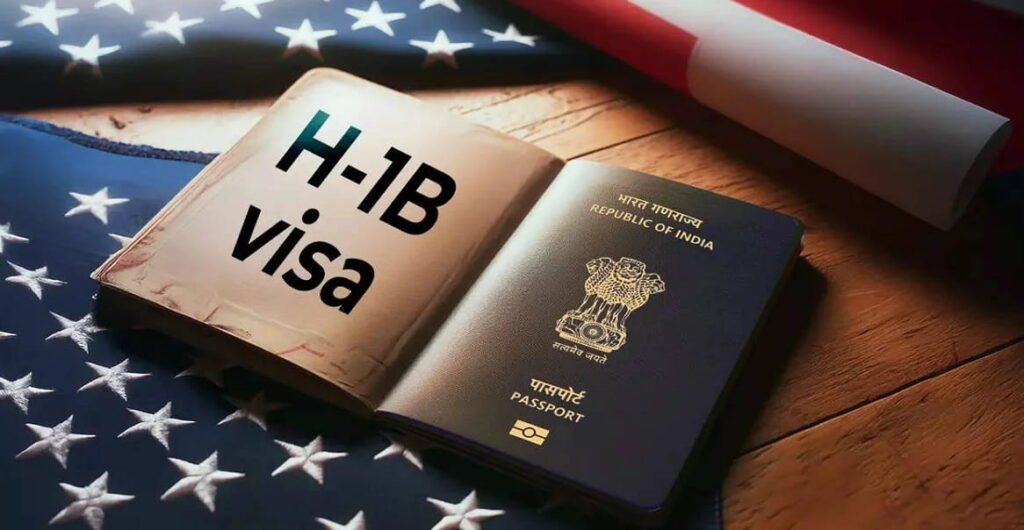
From $100,000 Fee to Permanent Rule
The proposed $103,265 fee follows a Trump-era directive that mandated a $100,000 payment for certain new H-1B petitions. Although that directive is set to expire in September, it instructed the DHS to formulate rules that would make this payment requirement permanent.
This fee has already been the subject of legal challenges. On June 8, 2026, the US District Court for the District of Massachusetts struck down the agency’s guidance enforcing the $100,000 payment requirement in the case of “State of California v. Mullin”. The DHS challenged this ruling and sought a stay from the US Court of Appeals for the First Circuit.
The First Circuit denied the government’s request on July 24. The DHS stated that while it disagrees with the ruling, it will comply with the court’s order while considering its next steps. The department has also clarified that it intends to collect the payment even if the court order is ultimately overturned. Meanwhile, U.S. Citizenship and Immigration Services (USCIS) has already received sufficient applications to reach the 65,000 regular H-1B cap and the 20,000 master’s cap set by Congress for the 2027 fiscal year.
Consequently, the proposed fee aligns with a trend toward making the H-1B system increasingly stringent, a system that is becoming difficult for employers and prospective immigrants to navigate and use.
Why is the H-1B path challenging for Indians?
For Indian professionals, the proposed fee represents yet another change in a series of adjustments affecting the traditional pathway that spans education and employment in the U.S. to long-term residency there.
Historically, the H-1B program has been a major avenue for Indian engineers, technology workers, researchers, financial professionals, and healthcare workers to secure employment in the U.S. However, rising costs, stricter selection criteria, and heightened scrutiny are making this path increasingly exclusive and uncertain.
Xiao Wang, CEO of Boundless Immigration, previously noted that the $100,000 fee has already impacted the market, particularly India-based IT consulting firms whose business models rely heavily on deploying employees to U.S. client sites. He also highlighted a shift among major H-1B employers, noting that for FY2025, giants like Amazon, Meta, Microsoft, and Google emerged as leading sponsors, displacing traditional Indian IT firms.
Another significant shift is the move toward a wage-weighted selection process. According to Wang, data from Boundless clients reveals that during the March 2026 cap season, the selection rate for senior (Level III) candidates was 68%, compared to 40% for entry-level (Level I) candidates. This disparity could be particularly significant for Indian students graduating from US universities and seeking their first jobs.
If the proposed ‘End H-1B Visa Abuse Act of 2026’ is enacted, it could introduce an additional layer of restrictions. The bill proposes a three-year moratorium on new H-1B visas, a reduction of the annual cap from 65,000 to 25,000, and the establishment of a minimum annual salary threshold of $200,000.
Also Read: Why are Foreign Medical Graduates back on the streets of Delhi weeks after NBEMS offered solutions?