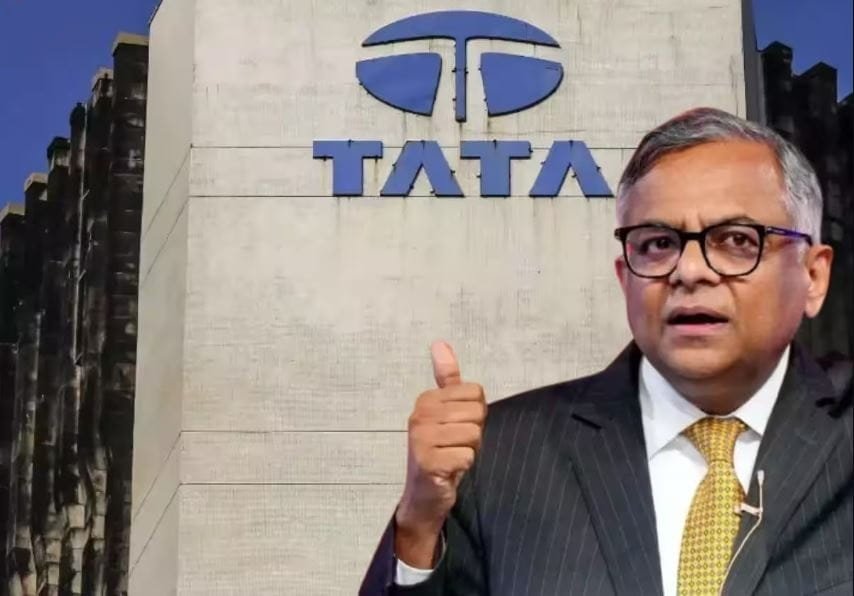
Reappointment of Natarajan Chandrasekaran: Tata Sons is planning to amend its ‘Articles of Association’ ahead of a potential Initial Public Offering (IPO). As part of this process, a proposal to reappoint Natarajan Chandrasekaran as Executive Chairman will be presented at an Extraordinary General Meeting (EGM). Ahead of the company’s board meeting scheduled for November 30, Noel Tata, head of the Tata Trusts, has challenged these moves.
A key aspect of this proposed change involves transitioning Tata Sons from a private company to a public company, effectively reversing a change implemented in 2017. The company’s current Articles of Association impose restrictions on the transfer of shares and the induction of new shareholders. Furthermore, Article 4(c) prohibits the company from inviting the general public to subscribe to its securities (such as shares). These provisions must be removed before an IPO can be launched.
Both upcoming Tata meetings face a similar challenge regarding the quorum (the minimum number of attendees required).
A discussion on the Reserve Bank of India’s (RBI) listing directives is a critical agenda item for next week’s board meeting. Despite Noel Tata’s opposition, the proposal is expected to secure sufficient support from the board and will subsequently be placed before the shareholders at the EGM.
According to Tata Sons’ plan, draft IPO documents would be filed with SEBI within 90 days of receiving shareholder approval, with the entire listing process to be completed within 180 days. Noel Tata has urged that his own merger proposal, which aims to avoid a public listing, be given priority. He argues that his proposal should be considered before the board decides on how to comply with RBI directives; otherwise, his alternative option would become redundant should the decision be made to proceed with an IPO.
Natarajan Chandrasekaran was reappointed as Executive Chairman
At the board meeting on September 17, Natarajan Chandrasekaran was reappointed as Executive Chairman for the next five years. There is now a proposal to place this reappointment before the shareholders at an Extraordinary General Meeting (EGM), and the matter of convening this EGM is included in the agenda for the board meeting scheduled for November 30.
His reappointment as a director, a position that rotates and upon which his chairmanship depends, remains pending. This issue is linked to the Annual General Meeting (AGM) that was adjourned on August 18 due to a lack of quorum.
Noel has questioned why the matter of Natarajan Chandrasekaran’s reappointment as a director is being moved to an EGM, given that it is already pending before the shareholders as part of the adjourned AGM. However, both meetings face the same issue regarding a quorum. One of the two principal shareholders of Tata Sons, the ‘Sir Ratan Tata Trust’, has been barred from participating in meetings by the Charity Commissioner of Maharashtra.
Consequently, it is unable, jointly with the ‘Sir Dorabji Tata Trust ‘, to nominate the representative required under the company’s Articles of Association to satisfy the quorum requirements.
In a letter to the Company Secretary of Tata Sons on Wednesday, Noel argued that the company should allow the AGM process to take its due course, rather than shifting the proposal for Natarajan Chandrasekaran’s reappointment as Chairman to an EGM. They also challenged any proposal, whether through amendments to Tata Sons’ bylaws or by any other means, aimed at retaining Natarajan Chandrasekaran as Executive Chairman without adhering to the established rules (Articles 118 and 121).
Observers who track Tata-related matters believe that the approval of Chandrasekaran’s position as Executive Chairman at the EGM is linked to ‘Article 105,’ which provides for the delegation of extensive management-related powers to a director.
Also Read: Isaiah Taylor and Valar Atomics: How a 27-Year-Old Dropout Built a $6B Nuclear Startup for AI