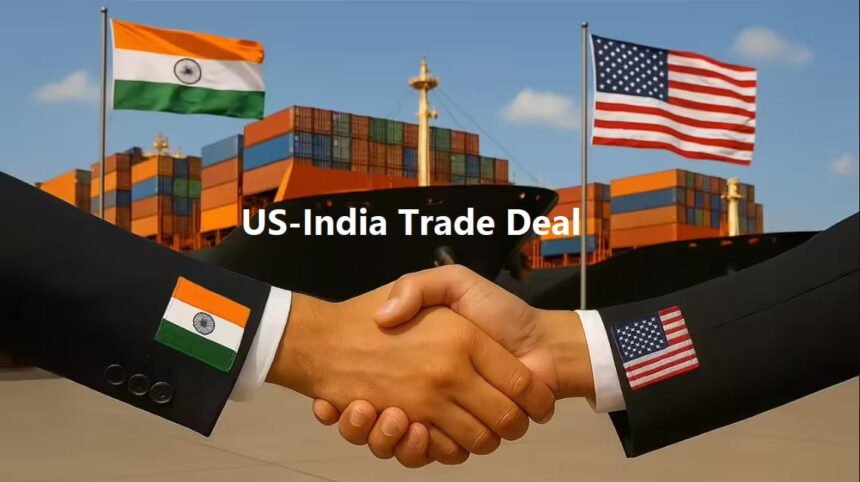
US Ambassador to India Sergio Gor stated on Tuesday that the US-India trade deal is in its “final stages,” with only 1% of the negotiations remaining. He expressed confidence that the deal would be finalised soon.
Addressing the US-India Strategic Partnership Forum Leadership Summit, Sergio Gor said they are committed to reaching an agreement as it would be mutually beneficial for both nations, noting that the deal is set to be finalised after approximately 18 months of negotiations.
He said, “We are in the final stages of this deal. Most of the deal has been completed. There are still a few outstanding issues on both sides. It is down to the final 1% of the deal.” Recent reports indicate that negotiations between the United States and India over a potential trade deal are entering a more advanced, decisive phase.

Context of the Negotiations
The discourse surrounding a bilateral trade agreement between the U.S. and India has intensified as both nations seek to deepen their economic partnership. The focus of these discussions generally revolves around:
A) Market Access: Addressing tariffs and non-tariff barriers to increase the flow of goods and services. Digital Trade and Data: Establishing frameworks that support the growth of the technology and digital services sectors, which are critical to both economies.
B) Supply Chain Resilience: Strengthening cooperation to reduce dependencies on other global manufacturing hubs and ensuring a more stable supply of critical components.
C) Regulatory Alignment: Efforts to harmonise standards to facilitate easier trade in pharmaceuticals, agriculture, and high-tech equipment. Sergio Gor, known for his work in political consulting and communications, has been noted in recent commentary for his perspective on the strengthening of U.S.-India ties.
His involvement and analysis often highlight the geopolitical importance of this relationship as a counterweight in the Indo-Pacific region and as a move toward greater economic integration between the world’s largest democracies.
His insights often frame these trade developments not merely as commercial agreements, but as a strategic pivot to secure long-term alliances against regional competitors and to foster high-growth economic corridors.
A) Current Status: While “final steps” suggests a nearing conclusion, it is important to note that complex trade deals between major global powers rarely have a single finish line. These negotiations are typically subject to:
B) Iterative Adjustments: Finalising the nuances of specific sectors (such as agriculture or intellectual property rights) can lead to protracted discussions even in the late stages. Domestic Political Considerations: Both governments must balance these international agreements with domestic labour interests and local industrial policies, which can influence the final sign-off.
C) Strategic Synchronisation: The timing of any formal announcement is often aligned with high-level diplomatic visits or summits to maximise the political impact. As of late June 2026, while the progress reported is significant, no formal treaty has been signed. The ongoing dialogue remains a high-priority item for both administrations, reflecting a mutual commitment to elevating the bilateral relationship.
Also Read: Despite the Rapid Growth of Digital Finance in India, Only 14% of MSMEs Secure Formal Loans: Report