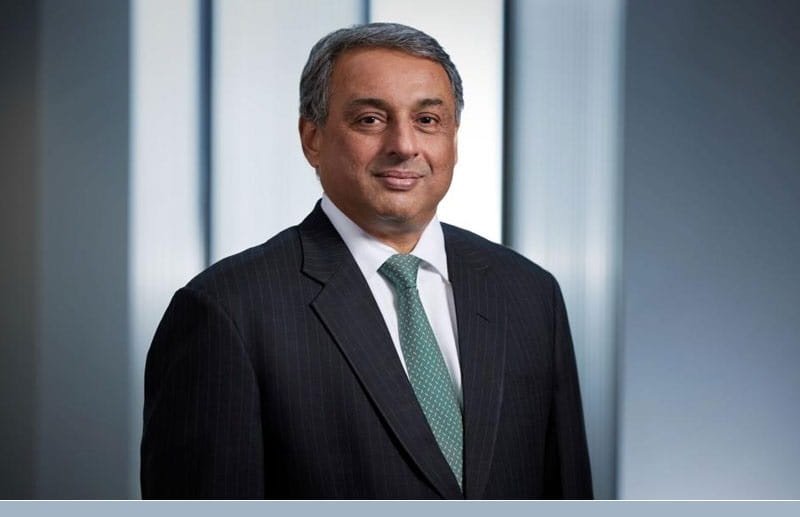
T.V. Narendran, MD and CEO of Tata Steel, stated on Wednesday that imports of Chinese steel remain a threat to India’s domestic steel industry. He emphasised that Indian manufacturers, who are investing heavily to expand their capacity, should not be unfairly disadvantaged by a flood of cheap imports.
Speaking to reporters at an event in New Delhi, T.V. Narendran said, “We must ensure that the Indian industry, which is investing significant capital to expand its capacity, is not adversely or unfairly affected.”
He noted that steel producers are in ongoing discussions with the government regarding measures to protect the domestic industry. These remarks come amid growing concerns over rising steel exports from China. According to Narendran, China’s current steel exports exceed 10 million tonnes per month and could reach 130 million tonnes by 2026.
According to an October report by Reuters, despite calls from domestic producers for greater protection, India’s Ministry of Steel is unlikely to impose any new restrictions on cheap imports in the near future. In the first half of the current financial year, China accounted for approximately one-third of India’s finished steel imports.
Tata Steel Aims for a Capacity of 40 Million Tonnes
Narendran stated that Tata Steel has the potential to increase its annual production capacity to 40 million tonnes between 2033 and 2035, with scope for further expansion beyond that level in the future. He indicated that reaching a capacity of 50 million tonnes is possible, though any investment decisions will be based on business requirements. He stated, “I am quite confident that construction work must be in full swing across our various centers to achieve the 40-million-tonne target.” At the same time, he indicated that reaching this goal by 2030 might not be feasible.
The company plans to complete the third phase of the Kalinganagar expansion next year, which will bring the plant’s capacity to 13 million tonnes. The capacity of Bhushan Steel is also expected to increase to 6.5 million tonnes, while the expansion of Neelachal Ispat Nigam Limited (NINL) has already been announced.
Tata Steel is also considering one or two additional electric arc furnace projects. Narendran mentioned that the company would look into investments in areas such as downstream operations, in addition to addressing the rising costs of raw materials.
Rising Costs and Coal Imports
Narendran noted that the cost of iron ore in India is on the rise. Meanwhile, Tata Steel will continue to source 60–70 percent of its coking coal requirements from abroad, as imported coal has a lower ash content.

The company procures the bulk of its imported coking coal from Australia, with a smaller portion coming from Indonesia. Narendran stated that Tata Steel finds it more prudent to purchase coal rather than invest in overseas coal mines. The company’s supply chain relies primarily on partnerships with Australian suppliers. He clarified that the company has no plans to invest in coking coal mines abroad.
Tata Steel Discusses Carbon Levies and European Support
Addressing the issue of carbon levies imposed by the European Union on steel imports, Narendran remarked that this debate reflects the diverging interests of Indian and European producers. Both sides seek a “level playing field” based on their respective manufacturing costs.
He explained that European steelmakers advocate for applying the same carbon tax to imported steel as is imposed on domestically produced goods. Conversely, Indian producers oppose the imposition of any additional taxes on exports destined for the European market.
Narendran stated, “As a steel producer in the European Union, we are required to pay a carbon tax. Naturally, the EU steel industry argues that if they are paying a carbon tax, then any other party selling goods into Europe should also be subject to an equivalent carbon tax.”
He added, “From the perspective of someone based in India, the question arises: why should I have to pay a carbon tax if I wish to sell my products in the European Union?” This comment comes at a time when the European Commission has imposed an anti-dumping duty of 9.5 percent on certain ‘cold-rolled flat steel’ products imported from India. This includes products manufactured by Tata Steel and JSW Steel.
According to Reuters, these duties came into effect on November 17. The measure is part of a broader action affecting five countries, with duty rates reaching as high as 27.9 percent. The investigation was initiated following a complaint filed in 2025 by the European steel association, ‘Eurofer’. The European Commission pointed to certain measures taken by the Indian government, which it claims have created an imbalance in domestic iron ore prices within India.
Furthermore, Narendran mentioned that Tata Steel has sought financial assistance from the Dutch government for a project, a matter that is currently under discussion. He noted that it is standard practice in Europe for governments to provide at least 40 percent of the capital expenditure for such projects.
Also Read: Yoga Can Improve Quality of Life for Heart Failure Patients, All-India Study Finds