
AI in Education: On Saturday, leaders of the BRICS nations supported the sharing of best practices in education and the human-centric use of emerging technologies, such as Artificial Intelligence (AI). They also discussed the prospects of developing a BRICS university global ranking and evaluation system. The leaders endorsed continued cooperation through existing BRICS education mechanisms, including the BRICS Network University.
In a declaration, the leaders commended India’s initiative to disseminate BRICS guidelines aimed at strengthening academic cooperation regarding traditional and indigenous knowledge systems. They encouraged the BRICS Network University to consider incorporating traditional, indigenous, and regional knowledge systems as an additional ‘International Thematic Group’ (ITG).
According to the declaration, “We welcome the outcomes of the 13th BRICS Education Ministers’ Meeting held in Bhubaneswar and renew our pledge to bolster cooperation in education as a primary driver for sustainable development, inclusive growth, and interpersonal exchanges.”
It further added, “We support continued cooperation through existing BRICS education mechanisms, including the BRICS Network University. We also appreciate India’s initiative to disseminate BRICS guidelines for strengthening academic cooperation on traditional and indigenous knowledge systems.
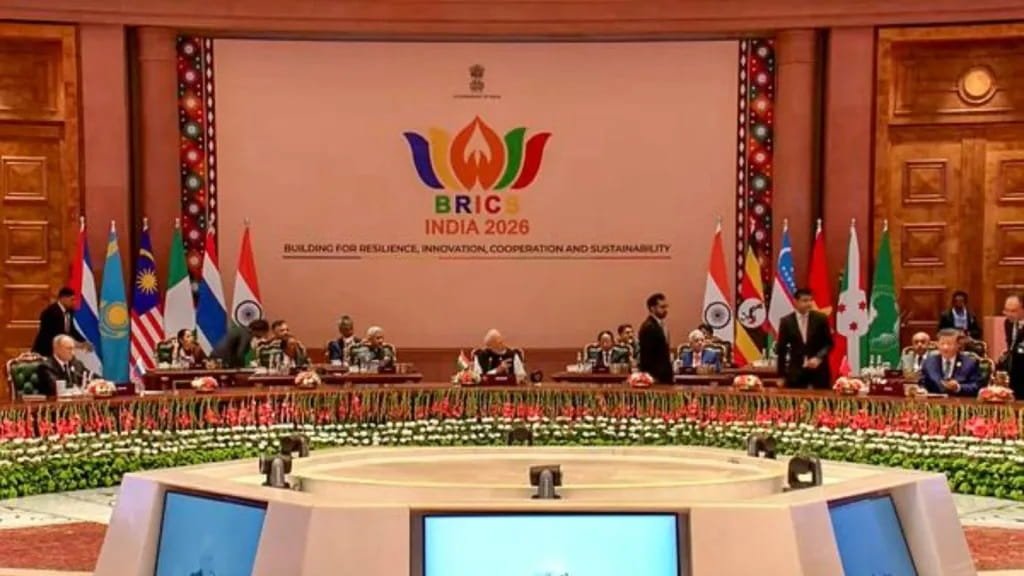
We encourage the BRICS Network University to consider including traditional, indigenous, and regional knowledge systems as an additional ‘International Thematic Group’ (ITG), in accordance with established governance procedures and in alignment with the national laws and policies of BRICS countries.”
BRICS Leaders Encouraged the Sharing of Best Practices
The BRICS leaders encouraged the sharing of best practices; cooperation in Early Childhood Care and Education (ECCE) and Foundational Literacy and Numeracy (FLN); mutual recognition of qualifications; academic and professional mobility; digital literacy; the safe, ethical, and human-centric use of emerging technologies in education (such as Artificial Intelligence); and the fostering of robust institutional partnerships.
“We encourage the continued organisation of the BRICS Rectors’ Forum, discussions on the BRICS Education Olympiad, and the exploration of possibilities for developing a BRICS University global ranking and evaluation system.
“We fully acknowledge the pivotal role of the BRICS TVET Cooperation Alliance (BRICS-TCA) in establishing a multilateral platform for project collaboration, promoting information and resource sharing, and advancing the joint development of TVET (Technical and Vocational Education and Training) among member countries.” It stated, “We look forward to the BRICS-TCA biennial progress report and the BRICS-TCA compendium of sustainable skill initiatives.”
The leaders reiterated their commitment to strengthening skill development systems and digital literacy, as well as enhancing workforce readiness across BRICS nations. Furthermore, they emphasised aligning training programs with evolving market demands and sustainable development priorities by fostering synergy between TVET institutions and the industry.
It stated, “We encourage collaborative efforts to improve institutional governance, enhance the quality of and access to education, and promote exchange and scholarship programs at undergraduate and postgraduate levels (including in Science, Technology, Engineering, and Mathematics (STEM). We also promote TVET-industry synergy to foster innovation and expand employment opportunities, as well as the exchange of innovation and knowledge to prepare learners and institutions for future opportunities and challenges.”