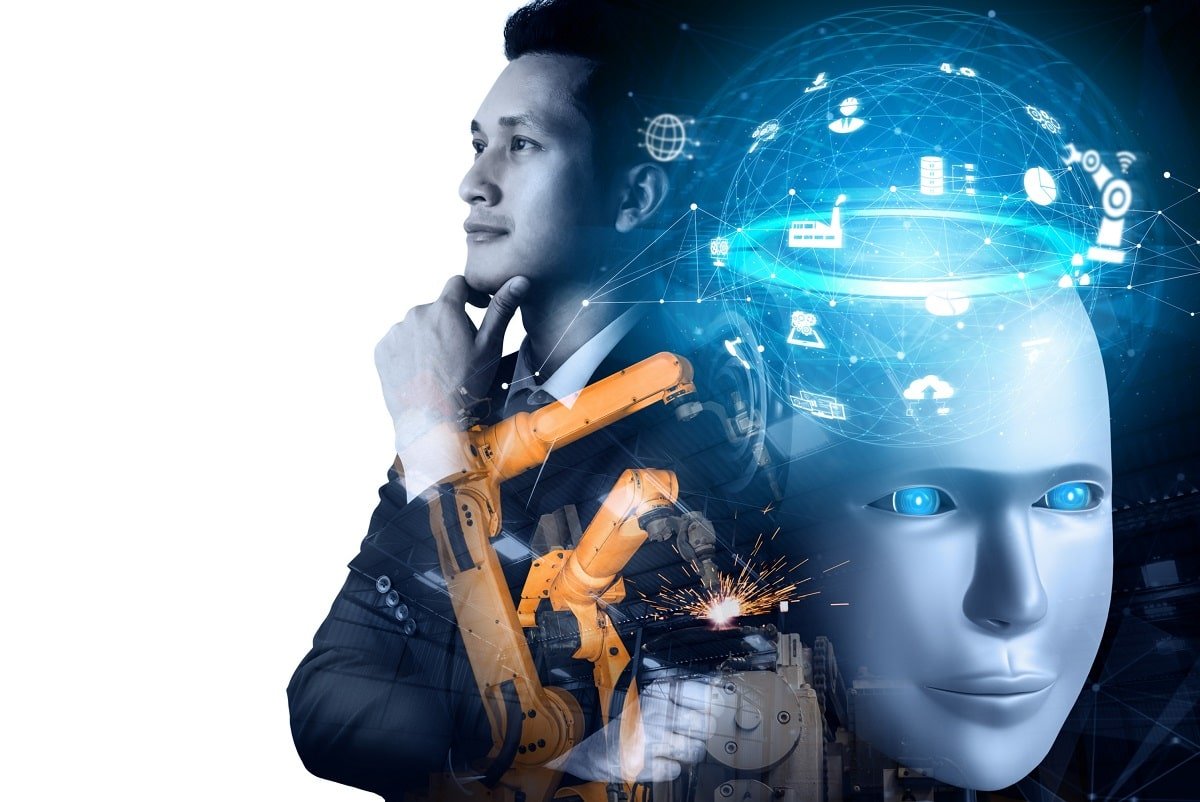
AI Careers: Artificial intelligence (AI) is rapidly transforming the job market. From chatbots replacing customer service representatives to generative models writing code and creating content, entire categories of work are taking on new forms. In this rapidly changing landscape, the concept of “AI-resilient careers” has taken center stage.
These are the jobs least likely to be automated or disrupted by AI in the near future. But what makes a career resilient to AI? It’s not about avoiding technology – it’s about leveraging uniquely human qualities, creative problem-solving, interpersonal depth, and strategic thinking, that machines still struggle to replicate. This article outlines the core qualities of AI-resilient careers and explains why they’re more important than ever.
AI Careers: Machines Still Struggle to Replicate
1. Human-Centered Skills: At the core of AI-resilient careers are human-centered skills – qualities rooted in empathy, ethics, persuasion, leadership, and relationship-building. AI may be able to analyze emotions or simulate empathy, but it doesn’t actually feel. Careers that rely on emotional intelligence, cultural understanding, and human nuance are still hard to automate.
Examples:
+ Healthcare professionals: Doctors, nurses, and therapists don’t just deliver treatment – they provide comfort, build trust, and make ethical decisions based on the patient’s values and context.
+ Social workers and counsellors: These roles involve deep empathy, ethical judgment, and nuanced human interaction that no algorithm can replicate.
+ Teachers and trainers: Teaching isn’t just the transfer of knowledge – it’s about motivating, guiding, and adapting to individuals unique learning styles. AI can support these professions through diagnosis or content delivery, but it can’t replace the emotional and interpersonal dynamics at their core.

2. Creative and Original Thinking
AI is adept at remixing existing data, not inventing from a blank slate. Creativity that involves original thought, interest, and risk-taking is still largely a human domain. This gives careers based on artistic expression, complex design, and conceptual innovation a strong edge.
Examples:
+ Writers, artists, designers, filmmakers: Although AI can generate content, it lacks context, voice, and vision. Creative professionals who use AI as a tool – rather than fear it as a competitor – will thrive.
+ Product developers and entrepreneurs: These roles involve connecting disparate ideas, identifying unmet needs, and starting something new – all of which require imagination and real-world insight. In a world full of AI-generated content, authenticity and originality become even more valuable.
3. Strategic Thinking and Decision-Making
AI can process massive amounts of data, but it lacks the broad decision-making capabilities needed to understand context, align with long-term goals, or make trade-offs in ambiguity. Careers that involve strategic decision-making, risk assessment, or cross-domain synthesis usually remain human-dominated.
Examples:
+ Executives and managers: Strategic leadership involves more than just analyzing KPIs. It’s about setting vision, making decisions under uncertainty, and dealing with people and politics.
+ Policymakers and legal professionals: Laws and regulations often rely on moral reasoning, social implications, and balancing competing interests – areas where pure logic doesn’t work. Jobs that require asking why, not just how, are less susceptible to automation.
4. Complex Problem Solving in Unstructured Environments
AI thrives in structured, rule-based environments. But many real-world problems are messy, ambiguous, and vaguely defined. The ability to deal with complexity, improvise solutions, and adapt quickly is still a human advantage.
Examples:
+ Engineers and technicians in dynamic environments: Think of field engineers working in disaster zones or maintaining aging infrastructure with unpredictable problems.
+ Consultants and analysts in volatile markets: These professionals often solve problems where data is incomplete, customer needs are unclear, and the environment is changing.
+ AI can assist with information processing, but humans are still in the lead when it comes to defining the problem itself and adopting solutions in real-time.
5. Ethics, Responsibility and Trust
+ As AI tools become more powerful, trust is becoming an increasingly important factor. Many careers will remain human-driven, not because they can’t be automated, but because society won’t allow it. Roles that require public trust, accountability and ethical judgment are more resistant to AI disruption.
Examples:
+ Judges, juries and ethics boards: Decisions involving justice, authority and ethics cannot be outsourced to algorithms without public backlash or legal constraints.
+ Corporate governance roles: Boards and compliance officers are responsible not just for profits, but also for stakeholder trust, environmental impact and corporate integrity. AI may be instrumental in decision-making, but the final authority in these areas will inevitably remain human.
6. Adaptability and Lifelong Learning
Perhaps the most important quality of an AI-resilient career isn’t tied to any single job or industry – it’s the ability to adapt, learn, and evolve. As AI accelerates change across every profession, those who can retool their skills, shift roles, or pivot industries will be best positioned to thrive.
Key mindsets:
+ Growth mindset: The belief that skills can be developed over time through effort and learning.
+ Tech literacy: Not everyone needs to be a programmer, but understanding how AI works – and how to work alongside it – will be essential.
+ Interdisciplinary fluency: People who can bridge technical and non-technical domains, or blend arts and sciences, will be harder to replace.
Summary:
AI will continue to reshape the world of work, but it will not render human labor obsolete. Instead, it will shift the emphasis from routine execution to emotional intelligence, creative innovation, and strategic thinking. AI-enabled careers are not about avoiding automation – they are about doing what machines cannot: connecting with people, making bold decisions, and thinking beyond statistics.
To thrive in an AI-driven world, individuals must develop uniquely human skills, be agile in their learning, and view AI as an ally, not a threat. The future belongs to those who combine humanity with adaptability – and focus on what makes them irreplaceably human.
The age of AI favors fluid thinkers, not rigid specialists.