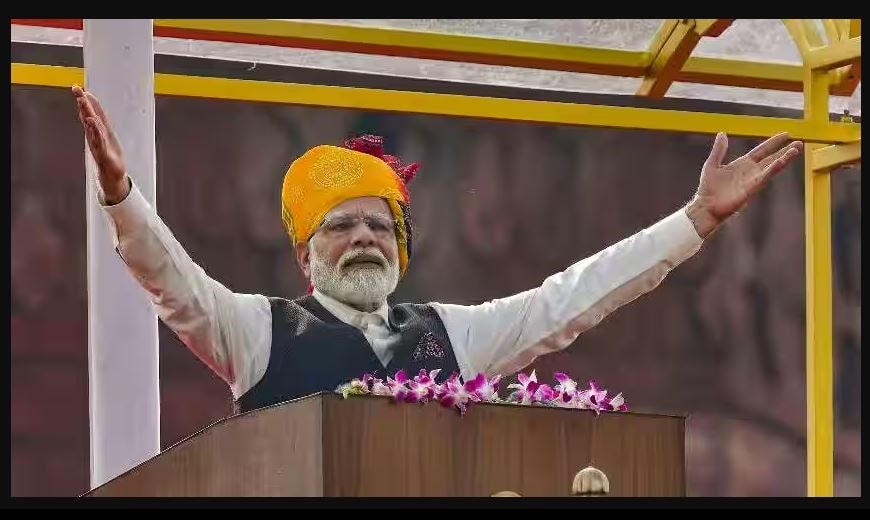
Longest-Serving Elected Prime Minister: On June 10, 2026, Prime Minister Narendra Modi achieved a significant political milestone: he became India’s longest-serving elected Prime Minister, surpassing Jawaharlal Nehru’s previous record of 4,398 days.
PM Modi’s Key Tenure Details
| First Term | May 26, 2014 – May 30, 2019 |
| Second Term | May 30, 2019 – June 9, 2024 |
| Third Term | On Going |
Addressing a meeting of National Democratic Alliance (NDA) leaders on this occasion, PM Modi described his tenure and this achievement not as a personal victory, but as a “collective Yagya” (a ritual of sacrifice or offering in a spiritual context) dedicated to the nation.

Key Aspects of the Prime Minister Modi’s Statement:
A) Philosophy of Service: PM Modi emphasised that he views his role as a “spiritual sadhana” (spiritual pursuit) rather than merely a political job. He stated that for him, the citizens of India are the “embodiment of the Divine” (Janata Janardan), and serving them is akin to worship.
B) Shared Contribution: By terming it a “collective Yagya,” the Prime Minister shifted the focus away from himself and onto others. He credited the NDA alliance, his colleagues, and party workers, noting that this journey was made possible only through the combined efforts and sense of duty of everyone involved in his government.
C) Gratitude to Citizens: He expressed deep gratitude to the people of India and attributed the stability and continuity of his government to the wisdom and maturity of Indian voters. He remarked that the transition from a period of instability (before 2014) to a stable and decisive government reflects the people’s desire for development.
D) Focus on the Future: Rather than dwelling on the record itself, he used the occasion to call for rapid development and emphasised the goal of a ‘Viksit Bharat’ (Developed India) by 2047.
He underscored the importance of maintaining a focus on the welfare of the poor and the middle class, as well as the aspirations of India’s youth. A formal resolution was also passed by the Union Cabinet during this event, describing this achievement as a symbol of India’s democratic consciousness and the power of public participation.
Also Read: India’s Biggest Employment Issue is not Unemployment, but a Lack of Employability.