
MBA Placements 2026: For MBA students, the traditional anxiety surrounding “Placement Day” has given way to a new kind of uncertainty regarding where, when, and how they will secure employment. While final placements remain a crucial milestone, companies are increasingly making hiring decisions only after observing candidates’ work over an extended period through internships, live projects, and pre-placement offers (PPOs).
The landscape of MBA placements in India is undergoing a significant transformation. The traditional, high-pressure “Placement Week” or “Placement Day” model, where hiring decisions relied primarily on a standard CV and a few key interview rounds, is being replaced by a continuous, flexible, and early-stage evaluation process.
Recruiters are now hesitant to commit to a two-year tenure with a candidate based solely on a résumé and a brief interview. Instead, the market evaluates candidates well before formal placement drives begin, prioritising proven performance, practical skills, and the ability to align with business needs.

MBA Placements 2026: Key Reasons Behind This Shift
1. Employers seek clear evidence of a candidate’s capabilities: There has been a significant shift in hiring practices; employers are moving beyond traditional resumes and credentials, placing greater importance on “proof of work” and verifiable skills rather than just paper qualifications. Since AI tools enable job seekers to submit hundreds of polished, automated applications in seconds, recruiters can no longer rely solely on text-based claims.
Instead, they want live evidence of how a candidate solves problems in real-time. In an era of rapidly evolving technology and business models, companies prioritise candidates who have solved real-world problems over those who merely look good on paper.
2. Reducing recruitment risks: By evaluating students over an extended period, companies reduce the risk of making a poor choice. A bad hire can cost an organisation anywhere from 30% to 200% of the employee’s annual salary; this encompasses not only direct recruitment expenses but also adverse effects on team morale, cultural fit, and operational productivity.
In campus placements, traditional interviews often fail to accurately gauge long-term potential, potentially leading to issues such as a lack of cultural alignment and workflow disruptions. By extending the evaluation period, organisations transform the hiring process from a hasty decision into a data-driven trial period.
3. Specific business needs: Instead of building general talent pools, companies are now hiring only when there is a clear and immediate business requirement. This is a very accurate observation regarding the current macroeconomic changes happening in recruitment.
This shift is not merely about fewer jobs or challenging placements. Recent placement data from B-schools for the 2026-27 period reveals a different and deeper picture. Placement rates across the top 25 B-schools declined from 97.5% in 2025 to 96.4% in 2026. The internship market is also undergoing a transformation, with average stipends at the top 25 schools dropping by approximately 23%.
MBA Placements Landscape for India’s Top Business Schools
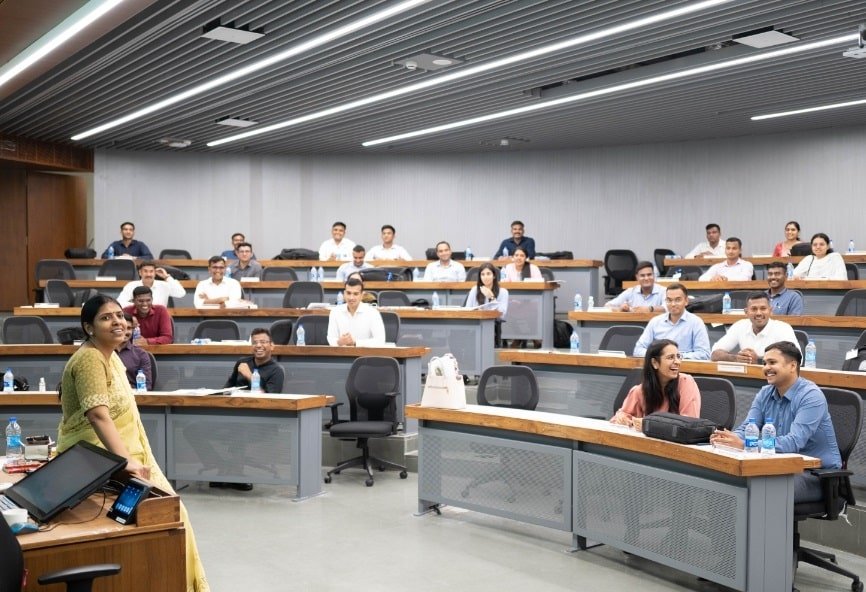
The placement landscape for India’s top business schools reflects a stabilising yet highly competitive environment. While premier institutions continue to command impressive compensation packages, the gap in performance and ROI (Return on Investment) between elite IIMs, elite non-IIMs, and Tier-2 institutes has become a defining characteristic of the season.
1. MBA Placements 2026: The Elite IIMs (The “Old” IIMs & IIM Mumbai)
The gold standard of Indian management education, comprising IIM Ahmedabad, IIM Bangalore, IIM Calcutta, IIM Lucknow, IIM Indore, IIM Kozhikode, and IIM Mumbai, continues to anchor the apex of the placement market. Average CTC: Typically ranges between ₹33 LPA and ₹36 LPA, with IIM Calcutta and IIM Bangalore leading the pack at roughly ₹34-36 LPA. Highest Packages: Domestic packages frequently touch ₹70 LPA to ₹1+ Crore, while select international roles cross the ₹1.4 to ₹2+ Crore mark.
| IIM | NIRF Rankings 2025 | Average Placement 2025-2026 | Highest Placement 2025-2026 | Compare College |
| IIM Ahmedabad | #1 | INR 34.53 LPA | INR 81.60 LPA | Compare Now |
| IIM Bangalore | #2 | INR 34.75 LPA | Not Updated | Compare Now |
| IIM Kozhikode | #3 | INR 28.18 LPA | INR 81.00 LPA | Compare Now |
| IIM Lucknow | #5 | INR 33.20 LPA | INR 1.00 Cr. (CPA) | Compare Now |
| IIM Mumbai | #6 | INR 31.40 LPA | INR 82.50 LPA | Compare Now |
| IIM Calcutta | #7 | INR 35.00 LPA | INR 1.45 Cr. (CPA) | Compare Now |
| IIM Indore | #8 | INR 27.30 LPA | INR 70.00 LPA | Compare Now |
2. Top-tier Non-IIM B-Schools (Powerhouses)
Many excellent non-IIM institutes perform on par with, or even better than, new and mid-level IIMs, often benefiting from specific structural advantages. Top-tier non-IIM business schools such as XLRI Jamshedpur, FMS Delhi, MDI Gurgaon, SIBM Pune, SPJIMR Mumbai, IIT Delhi (DoMS), JBIMS Mumbai, and IIFT Delhi remain at the forefront of the placement market.

Average CTC: Ranges from ₹22 LPA to ₹32+ LPA, placing them very close to the older IIMs. XLRI recorded an average package of ₹31.40 LPA, while FMS Delhi’s average stands at around ₹32+ LPA. Highest Packages: Domestic packages have ranged from ₹59 LPA (XLRI) to over ₹1 crore overall.
| Business School | NIRF Rankings 2025 | Average Placements 2025-2026 | Highesht Placements 2025-2026 | Compare College |
| IIT Delhi (DoMS) | #4 | INR 22.52 LPA | INR 43.55 LPA | Compare Now |
| MDI Gurgaon | #9 | INR 24.8 LPA | INR 97.50 LPA | Compare Now |
| XLRI Jamshedpur | 10 | INR 29.00 LPA | INR 60.33 LPA | Compare Now |
| FMS New Delhi | Not participating in the ranking | INR 32.77 LPA | INR 1.1 Cr. (CPA) | Compare Now |
| JBIMS Mumbai | Not participating in the ranking | INR 26.48 LPA | INR 55.60 LPA | Compare Now |
| SIBM Pune | 11 | INR 28.18 LPA | INR 74.84 LPA | Compare Now |
| IIFT New Delhi | 17 | INR 31.30 LPA | INR 72.00 LPA | Compare Now |
| SPJIMR Mumbai | 20 | INR 33.6 LPA | INR 75.00 LPA | Compare Now |
| NMIMS Mumbai | 24 | INR 24.6 LPA | INR 42.28 LPA | Compare Now |
ROI Perspective: FMS Delhi stands out in terms of Return on Investment (ROI). With very low tuition fees (approximately ₹2 lakh for the entire course) and an average package exceeding ₹32 LPA, its financial ROI is far superior to almost any other B-school globally. Similarly, XLRI Jamshedpur excels in specialised domains such as Human Resources (HR) and Business Management (BM).
MBA Placements 2026: IIMs vs. Tier-2 Non-IIMs
Choosing between new/baby IIMs (such as IIM Raipur, IIM Ranchi, IIM Rohtak, IIM Trichy, IIM Jammu), and Tier-2 non-IIMs (such as IMT Ghaziabad, MICA Ahmedabad, IMI Delhi, TAPMI, or Great Lakes) essentially involves a classic trade-off: long-term brand value versus immediate advantages regarding location, batch size, and industry readiness. While the IIM tag offers unparalleled prestige, established Tier-2 private B-schools often match or even outperform them on specific operational parameters.
The Average packages of new/baby IIMs range from ₹16 LPA to ₹20 LPA. While they benefit greatly from the “IIM brand tag” during initial resume screening, they face greater scrutiny in the hiring market; established recruiters have reduced entry-level hiring and are placing greater emphasis on PPOs (Pre-Placement Offers).
| New IIM | NIRF Rankings | Average Placements | Compare College |
| IIM Raipur | 15 | INR 18.33 LPA | Compare Now |
| IIM Tirchupalli | 16 | INR 18.33 LPA | Compare Now |
| IIM Ranchi | 18 | INR 19.26 LPA | Compare Now |
| IIM Rohtak | 19 | INR 20.03 LPA | Compare Now |
| IIM Jammu | 35 | INR 16.04 LPA | Compare Now |
Average packages of Tier 2 non-IIMs typically range from ₹14 LPA to ₹20 LPA. To remain competitive, these institutes rely heavily on corporate networking, location advantages (such as the Mumbai/Pune/Ahmedabad/Delhi-NCR hubs), and their strengths in niche areas like marketing and digital operations.

| Non-IIM B-School | NIRF Rankings | Average Placements | Compare College |
| IMT Ghaziabad | 30 | INR 17.64 LPA | Compare Now |
| MICA Ahmedabad | 33 | INR 20.12 LPA | Compare Now |
| Great Lakes Chennai | 37 | INR 15.00 LPA | Compare Now |
| TAPMI Manipal | 39 | INR 14.35 LPA | Compare Now |
| IMI Delhi | 40 | INR 17.19 LPA | Compare Now |
MBA Placements 2026: Conclusion
The MBA hiring landscape is becoming increasingly flexible and discerning. Recruiters are expanding their campus outreach while simultaneously exercising greater scrutiny regarding the specific roles they need to fill and the qualities they seek in candidates.
Now, preference is given to students who show the capability to solve real-world problems, instead of only those with the right degree or a famous campus name on their resume. Companies are also being more thoughtful in deciding who to hire, for which role, and for which skills to offer higher pay.
Consequently, the placement market now begins evaluating candidates, through internships and live projects, well before the formal placement season commences. Ultimately, domain expertise, preparedness for AI, and tangible work impact are the key factors determining hiring decisions and compensation packages.