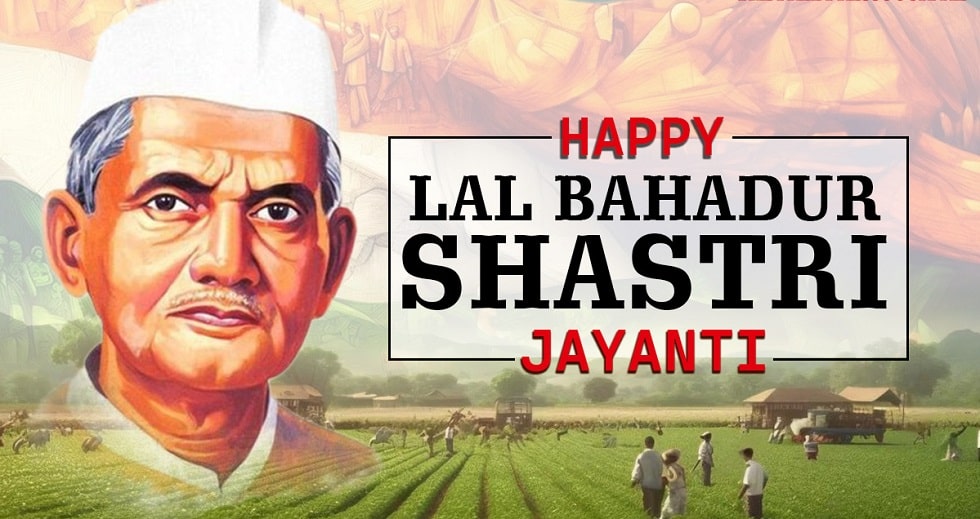
Today, India celebrates the birth anniversary of its second Prime Minister, Lal Bahadur Shastri Ji. He is remembered for his iconic slogan, ‘Jai Jawan, Jai Kisan‘ (Salute to the Soldier, Salute to the Farmer), which lauded the vital contributions of soldiers and farmers and continues to inspire people even today. Known for his humility, honesty, and connection with the common people, Shastri’s leadership left an indelible mark on India’s political and social landscape.
As the second Prime Minister of India, Lal Bahadur Shastri Ji remains one of the most revered leaders in the country’s history. Renowned for his humility, integrity, and unwavering resolve, Shastri steered India through numerous challenges during the mid-20th century. His life and leadership continue to inspire generations.
Lal Bahadur Shastri Ji: Early Life and Struggles
Born on October 2, 1904, in Mughalsarai (present-day Uttar Pradesh), Lal Bahadur Shastri came from a modest family. His father, a school teacher, died when he was young, leaving the family in difficult financial circumstances. Despite these hardships, Shastri Jee persevered and continued his studies. Deeply influenced by India’s freedom movement and inspired by Mahatma Gandhi and Bal Gangadhar Tilak, he participated in the Non-Cooperation Movement against British rule. After graduating from Kashi Vidyapeeth, he dropped his caste surname ‘Shriwastav’ and adopted the name ‘Shastri’, a symbol of his belief in equality.
Role in the Freedom Struggle
Lal Bahadur Shastri actively participated in the Indian independence movement and was imprisoned several times. He worked closely with the Indian National Congress and was deeply influenced by Mahatma Gandhi’s ideals of simplicity, self-reliance, and service.
Political Success: After Independence
After independence in 1947, Lal Bahadur Shastri rose rapidly through the ranks of politics. As a minister in Uttar Pradesh, he worked to improve government functioning. Later, in Prime Minister Jawaharlal Nehru’s central cabinet, he held key portfolios such as Railways, Transport, and Home Affairs.
As Railway Minister, he took moral responsibility for a major rail accident and resigned; a rare example of accountability in Indian politics at that time. His reputation for honesty and competence grew, making him a trusted leader within the Congress Party.
After Jawaharlal Nehru died in 1964, Lal Bahadur Shastri became Prime Minister. Although initially considered a compromise candidate, he soon proved his abilities. His leadership during times of crisis was seen as the defining characteristic of his short tenure (1964-1966).
Sudden Death of Lal Bahadur Shastri Ji in Tashkent (Then Soviet Union)
Shastri’s life was cut short on January 11, 1966, in Tashkent (then Soviet Union), just hours after signing a peace agreement with Pakistan following the war. His sudden death at the age of 61 shocked the nation and remains the subject of speculation and debate.
Legacy
Lal Bahadur Shastri’s tenure may have been brief, but his impact was profound. He is remembered as the “Man of Peace” who combined simplicity with strength. His call of “Jai Jawan, Jai Kisan” continues to resonate in India’s political and cultural life.