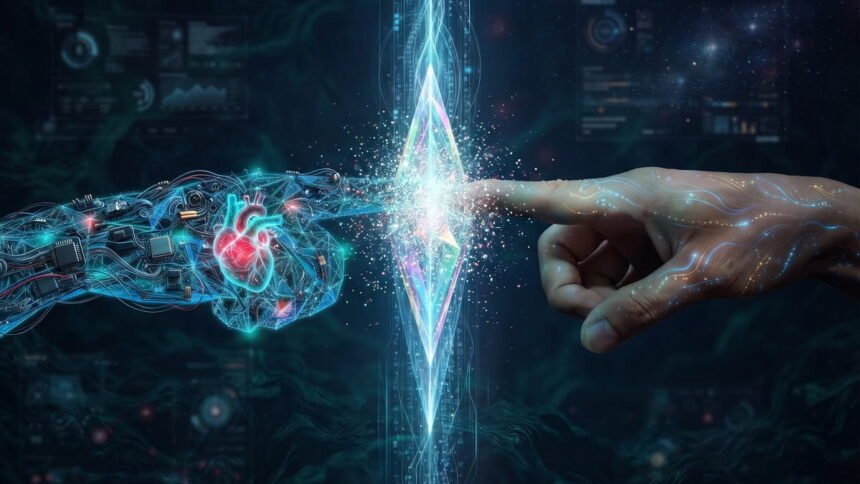
The world of education and employment is changing rapidly. Artificial Intelligence (AI), data science, virtual reality, digital archives, and other emerging technologies are transforming not only engineering and business but also the humanities.
Traditionally, subjects such as history, literature, philosophy, languages, sociology, archaeology, and cultural studies were considered separate from technology-oriented careers. However, this distinction is gradually disappearing.
A new interdisciplinary field called Digital Humanities is bringing technology and the humanities together, creating exciting career opportunities for students who want to combine creativity, culture, research, and technology.
In simple terms, Digital Humanities means using digital technologies and computational methods to understand, preserve, analyse, and communicate human culture, history, languages, literature, and society.
1. What is Digital Humanities?
Digital Humanities (DH) is an interdisciplinary field of study that sits at the intersection of new technologies and traditional humanities disciplines, such as history, literature, philosophy, music, and linguistics. Instead of relying solely on manual reading or traditional archive research, Digital Humanities utilises computational tools, software, and data science to analyse human culture, language, and history on a massive scale. It uses tools such as:
| Artificial Intelligence and Machine Learning |
| Big Data and data analytics |
| Geographic Information Systems (GIS) |
| Digital archiving and database management |
| Virtual Reality (VR) and Augmented Reality (AR) |
| Natural Language Processing (NLP) |
| Digital storytelling and interactive media |
For example, a historian can use AI to analyse thousands of historical documents, a linguist could employ machine learning to study endangered languages, and an archaeologist might utilise 3D scanning to digitally preserve ancient monuments.

This means that graduates in the humanities are no longer restricted to traditional career paths such as teaching, research, journalism, or the civil service. They can also explore opportunities within technology companies, museums, cultural organisations, research institutions, media firms, and digital platforms.
2. Why is Digital Humanities growing?
Digital Humanities (DH) is growing rapidly as it bridges the gap between traditional cultural analysis and modern data science. In a technology-driven world, this has made humanities degrees more practical, employable, and versatile.
Rather than rendering the humanities obsolete, technology has expanded their scope. It has transformed the field from a purely theoretical study into one that is active, experimental, and globally connected. There are several reasons behind the growing importance of this field.
A) Expansion of Artificial Intelligence: AI is changing how people study languages, analyse literature, interpret historical records, and understand social behaviour.
B) Digital preservation of cultural heritage: Governments, museums, universities, and cultural organisations are increasingly using digital tools to preserve manuscripts, monuments, photographs, historical records, and indigenous knowledge.
C) Growth of digital content: The demand for digital storytelling, interactive educational content, online exhibitions, and multimedia research is increasing.
D) Demand for interdisciplinary skills: Employers increasingly value professionals who can combine technical knowledge with communication, critical thinking, creativity, cultural understanding, and research skills.
E) Growth of the digital economy: Technology companies need people who understand human behaviour, language, ethics, culture, and the social impact of technology.
3. Emerging Careers at the Intersection of Technology and Culture
One of the most compelling aspects of ‘Digital Humanities’ is that it creates new career opportunities that go beyond traditional academic professions. Here are some excellent career options:
A. Digital Archivist: Digital archivists preserve and organise historical documents, photographs, manuscripts, books, audio recordings, and other cultural resources in a digital format. Where can they work?
| In museums and libraries |
| In government archives |
| In universities and research institutions |
| In organisations dedicated to cultural heritage |
| In digital publishing companies |
B. Cultural Data Analyst: Cultural data analysts use data analytics to study social trends, human behaviour, language, historical patterns, and cultural preferences. For instance, a researcher might analyse social media conversations to understand shifting attitudes toward education, politics, or popular culture. Required skills:
Data analysis, Statistics, Python, Data visualisation, and Research Methodology.
C. AI and Language Technology Specialist: This is an emerging career field where professionals work on technologies capable of understanding, processing, and generating human language. Their work may include:
| Preparing language datasets |
| Training and evaluating language models |
| Working on machine translation |
| Developing speech recognition systems |
| Supporting regional and endangered languages |
This sector holds special significance in India, given the country’s immense linguistic diversity and the need for better AI tools for Indian languages.
D. Digital Heritage and Museum Specialist
Museums, archaeological institutes, and cultural organisations are increasingly adopting digital technologies to bring history and heritage to the public. Professionals in this field may work on:
| Virtual museum exhibitions |
| 3D reconstruction of historical monuments |
| Digital tourism experiences |
| Interactive cultural exhibitions |
| Digitisation of archaeological collections |
E. UX Researcher and Human-Computer Interaction Specialist
> Technology companies require professionals who can understand how people interact with digital products.
> UX researchers study human behaviour, user expectations, accessibility, and cultural differences to improve websites, applications, and digital services.
> Graduates in the humanities can enter this field by obtaining additional training in UX research, without needing to become software engineers.
F. Digital Content Strategist and Storyteller
The growth of digital media has increased the demand for professionals who can integrate storytelling, research, technology, and an understanding of the audience. They can work in:
| Digital news organisations |
| Educational technology (EdTech) companies |
| OTT and entertainment platforms |
| Advertising and digital marketing agencies |
| Publishing and media companies |
G. GIS and Geospatial Research Specialist
Geographic Information Systems (GIS) help researchers understand the relationships between geography, history, society, and human activities. For example, GIS can be used to map historical trade routes, patterns of human migration, ancient settlements, population shifts, and cultural landscapes.
Career opportunities at a glance
| Career | Important skills | Potential sectors |
|---|---|---|
| Digital Archivist | Archiving, metadata, databases | Museums, libraries |
| Cultural Data Analyst | Python, statistics, research | Research, consulting |
| AI Language Specialist | NLP, linguistics, AI | AI and technology |
| Digital Heritage Specialist | 3D modelling, VR, digitisation | Tourism, museums |
| UX Researcher | Psychology, research, UX | IT, product companies |
| Digital Content Strategist | Writing, SEO, analytics | Media, marketing |
| GIS Specialist | GIS, mapping, spatial data | Government, research |
These career paths are evident in programs offered by institutions such as University College London and the University of Glasgow, which integrate digital skills with cultural research, technology, and professional practice.
Also Read: BITS Pilani Announces 100% Tuition Fee Scholarship for Top 1,000 BITSAT Rankers