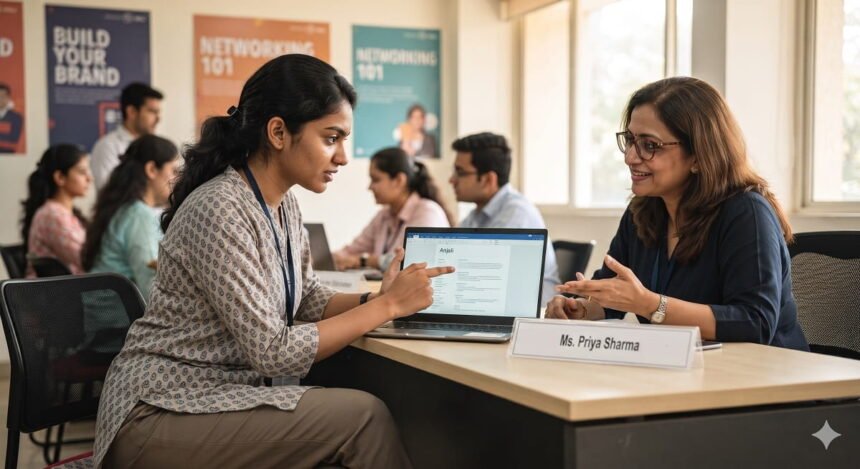
Career Dilemmas in Today’s World: The shift from higher education to the professional world has long been considered a milestone achievement. However, for the modern graduate, this milestone increasingly feels like a mismatch. Across the globe, millions of young professionals find themselves caught in a distinct psychological and financial paralysis: the career dilemma of being over-educated for entry-level roles, yet under-experienced for the actual job market. They are trapped between the promise of their degrees and the stark reality of the modern workforce.
The Traditional Promise vs. Changing Reality
For many decades, a straightforward perspective on higher education prevailed: graduate from high school, earn a college degree, and embark on a stable career path with opportunities for advancement. This mindset belonged to an era when obtaining a degree was difficult, and it was considered a vital benchmark of competence.
Today, the importance of that standard has diminished. The widespread expansion and mass promotion of higher education have led to an overabundance of degrees. For jobs that once required only a high school diploma or basic vocational training, a bachelor’s degree has now often become a mandatory prerequisite.

Consequently, graduates find that the degrees they worked so hard to earn offer them no distinct advantage; instead, these degrees function merely as an expensive ‘entry ticket’ into a field that is already heavily crowded.
In this article, we explore the complexities of modern careers
For young professionals fresh out of college, entering the workforce can feel less like walking along a clear path and more like navigating a route filled with obstacles, a journey where the rules can change right in the middle of the race. There was a time when a university degree was considered a sure-fire way to secure career stability; today, however, many job seekers find themselves confronting unexpected hurdles. Here are three major challenges currently shaping the employment landscape for young graduates:
A) The endless depths of Applications: Spending hours crafting resumes and filling out detailed online applications, only to receive no response. Many candidates fall victim to the frustration of “ghost jobs”, postings that remain active online even when companies are not actively hiring, leaving job seekers feeling neglected and undervalued.
B) The paradox of “entry-level” experience: Job listings for “entry-level” or “fresher” roles often demand two to three years of corporate experience or a specific technical portfolio. This situation creates a difficult cycle for recent graduates who are trying to kickstart their careers.
C) Algorithm-based hurdles: Navigating automated ‘Applicant Tracking Systems’ (ATS), which scan resumes for specific keywords before a recruiter ever sees them. This digital screening process can sometimes filter out qualified candidates based solely on their formatting or the specific terminology used, rather than their actual potential.
Deciding the Next Steps
To bridge the gap between the classroom and the real world, both students and educational institutions need to shift their approach toward professional preparation. Relying solely on a formal curriculum to ensure career security is no longer an effective strategy.
A) Prioritising Skills Over Degrees: In today’s economy, the specific, adaptable skills you possess carry far more weight than the reputation of the institution you attended. Developing technical proficiency, project management capabilities, and strong communication skills during your studies proves far more valuable than simply achieving a high GPA.
B) Building a Portfolio, Not Just a Resume: In a job market that values practical application over mere theoretical knowledge, tangible evidence of your work is paramount. Engaging in concrete projects, contributing to open-source platforms, or taking on small-scale freelance work provides solid proof of your abilities, helping you overcome the hurdle of a perceived “lack of experience.”
C) Continuous Upskilling: A degree is no longer the culmination of one’s education; rather, it is merely a starting point, a foundation. Success in the modern workforce requires a lifelong learning mindset, where individuals continuously update their skill sets to keep pace with evolving technological demands.
Ultimately, the career-related challenges faced today do not stem from a lack of ambition; instead, they reflect a clash between an outdated educational model and a rapidly evolving modern economy. By recognising this reality, graduates can stop viewing their struggles as personal shortcomings and, instead, take full control of their own professional development.
Also Read: The Legal Profession Is Not for the Faint-Hearted: CJI Surya Kant at NLSIU