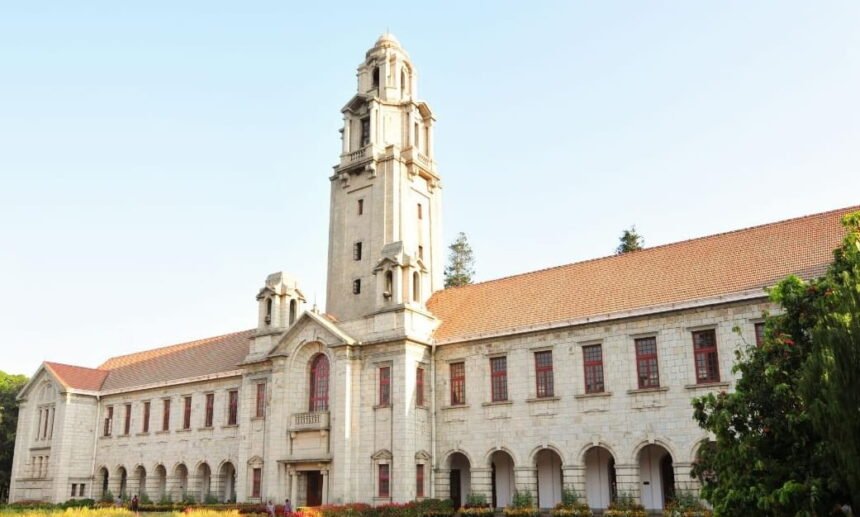
Indian Institute of Science Bangalore: In the ‘Times Higher Education’ (THE) World University Rankings released on Wednesday, private universities like Galgotias University and Amity University scored higher on the “Research Quality” metric compared to the Indian Institute of Science (IISc), one of India’s premier research institutions. This has raised questions about the credibility of the ranking methodology.
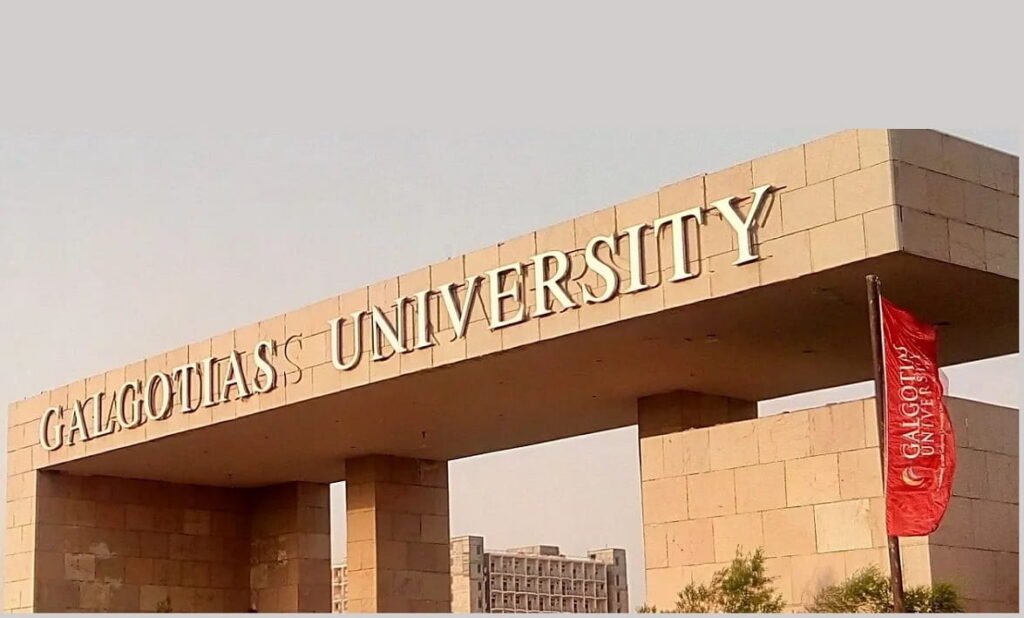
Indian Institute of Science Bangalore (IISc), which emerged as India’s highest-ranked institution with a global rank of 254 in the 2027 rankings, stood at the 64th position among 143 Indian institutions in terms of research quality, with a score of 51.5. Greater Noida’s Galgotias University scored 67 and secured the 23rd rank, while Noida’s Amity University scored 76.9 and ranked 12th. On this specific metric, Saveetha University topped the Indian list with a score of 95.1, followed by Graphic Era (93.6) and Chitkara (87.1).
Research quality accounts for 30% of the overall ranking, making it the most significant of THE’s five performance metrics. The 23rd edition of this UK-based ranking includes 2,297 universities across 118 countries and regions. Institutions are evaluated based on 17 performance metrics across five key areas: teaching, research environment, research quality, international outlook, and industry impact.
India’s research community has criticised these results, particularly questioning the extent to which citation-based metrics accurately reflect the quality and integrity of research. Achal Agarwal, founder of ‘India Research Watch‘, said, “Questions have been raised regarding the peculiar results produced by the THE ranking’s research quality metric since 2024. After defending their methodology for the past two years, they have finally announced some minor changes to the process starting next year.”
‘India Research Watch’ regularly highlights research-related irregularities in India. Yet, no action has been taken by them against the institutions clearly involved in misconduct, which is evident from the retracted research papers. Several institutions performing well on the research quality metric have also recorded some of the highest numbers of retracted research papers globally.”
Galgotias’ standing on the research quality metric has drawn attention, particularly given the questions surrounding its research credentials. In February 2026, the university was asked to withdraw from the ‘India AI Impact Summit’ held at Bharat Mandapam in New Delhi. This occurred because the university had presented a Chinese-made robotic dog, readily available in the market, as a product developed at its ‘Centre of Excellence’. The university apologised for the incident, stating that the error was caused by a staff member who was unaware of the product’s actual origin.
This incident also drew attention to the university’s patent record. Between its inception in 2011 and the 2024-25 period, Galgotias filed 2,297 patent applications. This figure far exceeds the corresponding numbers for IIT Bombay (1,646), IIT Madras (1,782), and IIT Kanpur (939). Only 24 of Galgotias’ applications resulted in granted patents, representing a success rate of approximately 1%. In 2022-23 alone, the university filed 1,089 applications, a figure exceeding the total number of applications filed by all IITs combined that year.
THE’s research-quality metric comprises four indicators: citation impact (15%), and research strength, research excellence, and research influence (each weighted at 5%). The citation impact indicator measures the average number of times an institution’s published research is cited by scholars worldwide. The data is normalised to account for variations in citation practices across different disciplines.
For the 2027 rankings, THE reported that its bibliometric data provider, Elsevier, supplied 188.7 million citations for 19.9 million publications. These publications included journal articles, reviews, conference proceedings, books, and book chapters published between 2021 and 2025. Citations received by these publications between 2021 and 2026 were also collected. The dataset encompassed over 29,100 active peer-reviewed journals indexed in Elsevier’s Scopus database.
THE Did Not Respond to Queries From HT
THE has acknowledged flaws in its methodology and announced changes for the 2028 edition, scheduled for publication in the autumn of 2027. In a statement on September 30, Phil Baty, THE’s Chief Global Affairs Officer, said that these changes would include capping institutional self-citations and adjusting research-quality metrics to mitigate the impact of citation counts.
Betty said, “So much depends on the ranking outcomes, which is why it is appropriate for universities to carefully scrutinise the criteria, methods, and data behind their scores and public rankings. He added that THE encourages this type of evaluation via an “open and collaborative approach” and through tools that allow universities to benchmark themselves against their peers.
Also Read: IISc Tops in India, Oxford University Retains Its Spot: THE World University Rankings 2027