
India’s Job Market: There was a time when a fresher’s qualification simply meant holding a degree with excellent grades from a reputable college. For many graduates, this was the gateway to the professional world. It was followed by a series of interviews; while the process could be challenging, there was at least a tangible hope of secureing that first job. Fast forward to 2026, and speaking of the past in such terms no longer feels like an exaggeration.
What do Freshers Need to Secure a Job Today?
Prior experience: It may sound counterintuitive, but it is a bitter reality plaguing entry-level professionals. A new report by the employment platform ‘Indeed’ paints a picture that is hard to believe. According to the survey, 70% of young Indians believe that securing a first job today is significantly harder than it was three to five years ago.

The job market has undergone a complete transformation in just 3-5 years, largely due to AI. Even more startling is the finding that 72% of respondents say employers often expect prior experience even for entry-level roles, while 61% report rarely receiving a response after applying. It is akin to expecting a child to master complex spellings before they are even admitted to school. Similarly, graduates of 2025 and 2026 find themselves caught in a state of uncertainty.
The Contradiction of Experience
Perhaps the most significant point in this report is what economists and labour market experts often call the “experience contradiction.” Employers are increasingly seeking candidates who can hit the ground running, thereby minimising training costs and reducing onboarding time. Yet, by definition, new graduates enter the market with limited professional experience.

The result is a contradiction: young candidates are expected to possess experience before they have even had the chance to acquire it. While experience is in demand, opportunities remain scarce. Only 20% of respondents reported securing a paid internship during their studies, while 18% stated they had no opportunities for internships, projects, placements, or freelance work.
The issue is not limited to employability but extends to access to opportunities. Students from institutions with strong industry networks often gain experience through internship and placement programs. In contrast, students from smaller towns or institutions with limited networks frequently graduate without such opportunities, leaving them at a significant disadvantage in the job market.
A Crowded Job Market
The greatest challenge lies not in finding job vacancies, but in standing out amidst thousands of other candidates. While this challenge has always existed, it has been exacerbated by the intense competition in today’s job market.
Nearly half (49%) of the respondents identified getting shortlisted during the hiring process as the most difficult stage. Meanwhile, 61% stated that they rarely receive a response after submitting an application.
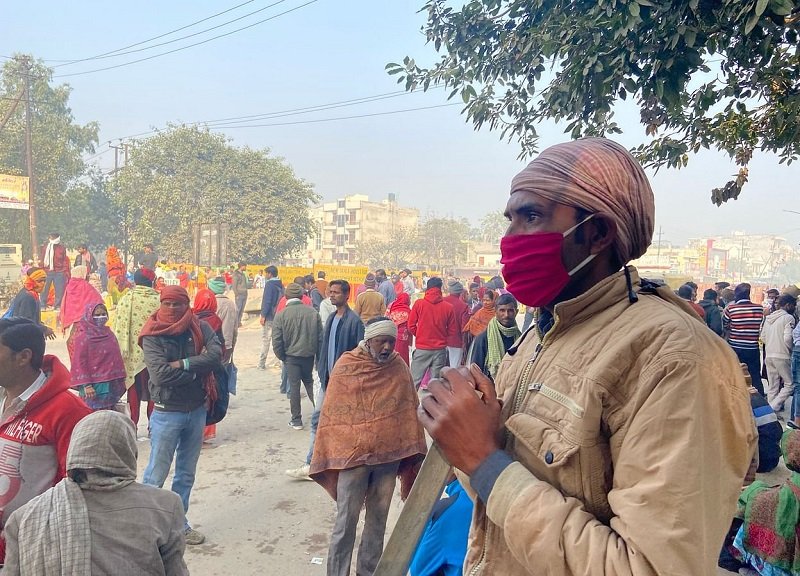
While the proliferation of hiring platforms has made applying for jobs easier, actually securing employment is becoming increasingly difficult. A single job opening can attract hundreds, and sometimes even thousands, of applications within just a few hours.
For employers, finding the right candidate amidst this mountain of applications has become a challenge. Candidates often feel as though they are sending their resumes into a void. The result? A widening gap between effort and outcome.
When the Need to Make Ends Meet Overshadows Career Aspirations
Data from the report points to another growing concern: the disconnect between career expectations and the reality of the job market. There was a time when freshers would evaluate job offers based on their preferred role, company, and location. Those days are gone!
The data reveals that only 14% of individuals expect their first job to align with their preferred role, company, and location. On the other hand, 43% acknowledged that financial constraints are limiting their opportunities and influencing their decisions. This is where the shift lies.

Traditionally, the start of a career was viewed as a time for learning and skill development. However, financial pressures are now compelling graduates to prioritise earnings and stability over long-term career goals. The first job is no longer an idealised dream; it is becoming a necessity. While this may provide immediate employment, it raises questions regarding long-term employee satisfaction, productivity, and retention.
Employees who take a job primarily out of necessity are more likely to switch jobs, change career paths, or become disengaged from their work.
A Hidden Cost: Self-confidence
While the financial consequences of a prolonged job search are evident, the psychological impact can be even more significant. According to the survey, 64% of people said that repeatedly applying and facing rejection has eroded their self-confidence or motivation. Only 20% believe they are currently on the right track regarding their intended career path.
These findings highlight an aspect of unemployment that is often overlooked in policy discussions. For many young people, the job search is no longer a brief transitional phase; it is becoming a prolonged process characterized by uncertainty, delayed responses, and repeated setbacks.
Such experiences can impact not only the trajectory of a career but also an individual’s self-confidence, professional identity, and long-term ability to remain engaged with the labor market.
Are Degrees Being Produced Faster Than Job Opportunities in India?
These findings emerge at a time when India is navigating a significant demographic phase. The country possesses one of the world’s largest youth populations, and access to higher education continues to expand. The current situation raises a critical question that demands reflection: Is the pace at which graduates are being produced outstripping the rate at which quality entry-level jobs are being created?

The challenge is not merely a shortage of jobs; it is also a matter of aligning skills, expectations, and opportunities. Employers are increasingly seeking candidates who possess practical experience, strong communication skills, and job readiness. In contrast, educational institutions often prioritise academic achievements. The gap between classroom learning and workplace requirements remains a persistent concern across industries.
Rethinking Entry-Level Hiring
The future of entry-level hiring may depend less on prior experience and more on how organisations identify potential. Data supports this view as well. If the requirement for prior experience persists for entry-level jobs, there is a risk of creating a cycle in the labour market where opportunities rapidly go to those who already possess certain advantages, while others struggle to get a start.
Breaking this cycle may require a robust internship ecosystem, better coordination between campuses and the industry, expanded placement support, and hiring practices that prioritise skills and potential over previous job titles.