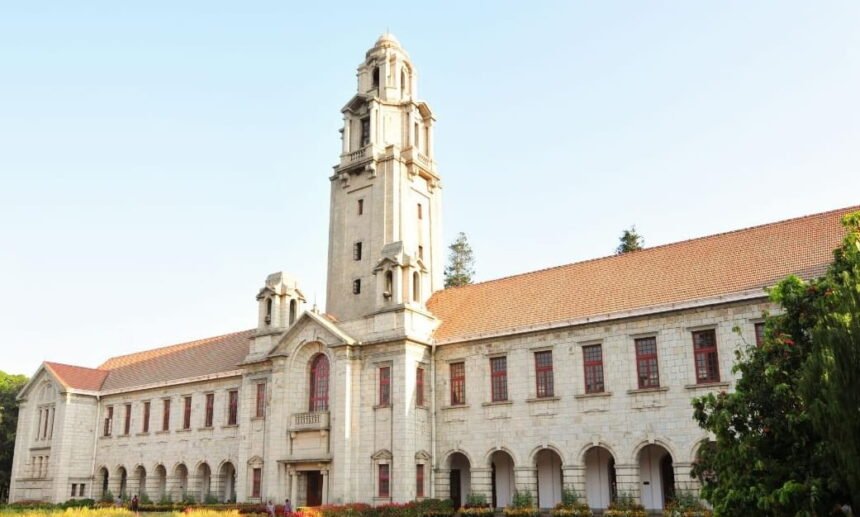
IISc Bangalore: A professor at the Indian Institute of Science (IISc) in Bangalore has inspired his students to think deeply the future of university education if corporate campus hiring drops in the next five to ten years. Dr. Prathosh, an IISc Bangalore professor, posed this question considering the rising adoption of Artificial Intelligence (AI) in workplaces.
Speaking to students in class, he said, “You are already seeing widespread layoffs and similar trends, and eventually, this is bound to happen. I mean, it’s just a matter of time before companies stop offering jobs, so what will universities do then?
Artificial intelligence systems are currently able to perform duties such as coding, data analysis, report generation, and research assistance. As enterprises adopt these tools, the requirement for numerous employees for tasks traditionally assigned to junior personnel will decline.
He added, “I don’t know what we teach in universities, or if there is even any point in teaching it anymore.” This could impact campus recruitment, which has long been a crucial pathway from higher education to employment in India.
The professor’s question is simple yet significant: if companies stop visiting universities in large numbers to recruit new staff, what will be the true purpose of university education?
AI Could Transform Entry-Level Jobs
On-campus placements usually give new graduates their initial entry into the professional world. Yet, if AI enables companies to maintain productivity with a smaller workforce, hiring demand for freshers in specific sectors might drop.
Take AI, for example: if a task that used to take 100 employees can now be done by 50, companies might not need to hire at such a large scale anymore.
This doesn’t mean campus placements will stop. Still, it definitely brings up how universities are getting students ready for a job market where AI can quickly take over some entry-level work.
What should students learn?
AI is also transforming the skills students might need.
Previously, students were expected to find information, comprehend it, and utilize it to complete tasks. AI can now assist with many of these stages. Consequently, students may need to focus more on asking the right questions, verifying information generated by AI, and leveraging it for problem-solving. Understanding how and when to use AI could also become an integral part of a student’s education.
The rise of AI does not mean that university degrees will lose their value. Universities offer opportunities to work in labs, interact with professors, engage in research projects, and collaborate with peers. These experiences provide value that extends far beyond merely acquiring job-related knowledge.
However, as the nature of work evolves, the role of universities may also shift. Rather than being viewed solely as a pathway to employment, universities might need to place greater emphasis on preparing students for research, problem-solving, experimentation, and working with emerging technologies.
Therefore, the crucial question for students may not be which degree they hold, but rather what they can achieve with their education that AI cannot accomplish on its own.
IISc Bangalore professor sheds light on a big problem in higher education
It remains uncertain whether campus hiring will see a significant decline over the next 5 to 10 years. Still, the point made by the IISc Bangalore professor sheds light on a big problem in higher education: if AI changes how companies hire and work, shouldn’t universities also rethink what they’re training students for?