
The argument that India’s primary challenge is not merely unemployment but ‘unemployability’ highlights a fundamental disconnect between the education system and the needs of the modern labour market. While millions of students graduate annually, a significant portion lacks the specific skills, both technical and soft, that employers currently demand.
This creates a paradox: despite a vast pool of job seekers, companies struggle to find the right talent.
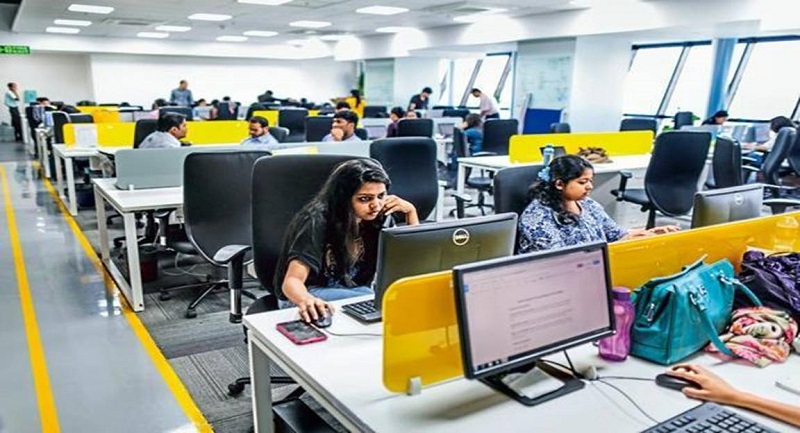
The Root of the ‘Unemployability’ Problem:
This crisis stems from an “alignment gap.” Education in India has historically prioritised rote learning, theoretical knowledge, and obtaining degrees, whereas today’s economy demands practical competence, adaptability, and a commitment to continuous learning. Here are the key areas where this gap is evident:
1. The Theory-Practice Gap (Hard Skills): Many students grasp concepts well but struggle with practical application.
A) Example: A Computer Science graduate might explain the theory behind database management systems or complex algorithms yet fail a basic coding test that requires writing clean, version-controlled code (e.g., using Git) or integrating a simple API.
B) Example: A Commerce or Finance graduate might secure excellent grades in accounting theory but struggle to use professional tools like advanced Excel, SAP, or Tally for real-time financial reporting and analysis.
2. Lack of “Soft Skills”: Employers often note that even when candidates possess the requisite degrees, they lack “workplace readiness”,the ability to work effectively within a team or handle professional pressure.
A) Example: A candidate might have excellent technical grades but lack the interpersonal communication skills or emotional intelligence required to collaborate within cross-functional teams, resolve conflicts, or clearly articulate ideas to clients.
B) Example: Many recent graduates struggle with critical thinking and problem-solving. Instead of identifying the root cause of a problem, they may wait for explicit, step-by-step instructions—a behaviour reinforced by an exam-centric culture that discourages questioning or taking initiative.
3. Outdated curricula vs. rapidly evolving industry needs: The pace of technological change often outstrips the speed at which academic curricula are updated.
A) Example: By the time a university curriculum for a degree program is prepared, approved, and implemented, the industry may have already moved through two or three cycles of new tools. For instance, while AI and data science have become crucial, many undergraduate programs still focus on outdated programming frameworks that see little use in today’s fast-growing tech companies.
4. Culture of assessment: In the Indian education system, student assessment is largely based on the ability to memorise and reproduce information under time pressure.
The impact: This produces students who excel at “scoring well on tests” rather than building a professional portfolio. In contrast, employers place greater value on portfolios, internships, and project-based experience. When a student focuses solely on CGPA throughout their studies, they often lack tangible “proof” of their work to showcase to potential employers. Why does this matter for the economy?
A significant gap between educational outcomes and market demands leads to several adverse consequences:
> High training costs: Companies often have to invest months in “finishing schools” or intensive onboarding programs to make new hires job-ready, which dampens enthusiasm for recruiting entry-level employees.
> High attrition: When new hires feel unprepared for their roles or find the work does not match their expectations, the likelihood of them quitting increases. This drives up turnover rates, negatively impacting both the employee’s career and the company’s productivity.
> Frustration and underemployment: Many highly capable graduates end up in jobs that offer no scope for advancement or do not align with their qualifications. This leads to personal frustration and represents a loss for the nation’s demographic dividend.
The Way Forward:
To address this, there must be a shift from “degree-based hiring” to “skill-based hiring,” along with bridging the gap between academia and industry: Industry-academia linkages, incorporating real-world projects, guest lectures by industry professionals, and mandatory long-term internships into the curriculum.
Emphasis on experiential learning: Encouraging students to contribute to open-source projects, build personal portfolios, and learn by doing rather than just studying.
Systemic Reform: Updating curricula more frequently and emphasising multidisciplinary problem-solving rather than rote memorisation.
Also Read: Amid Rising AI Investments and Cost Pressures, Oracle Prepares to Cut Thousands of Jobs