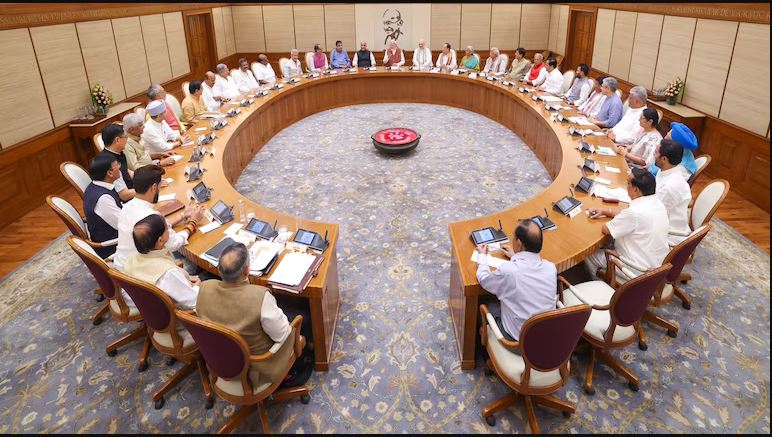
The Union Cabinet today approved the Vikas Bharat Shiksha Adhikaran Bill. It proposes a unified regulator for higher education. It will replace existing statutory bodies such as the University Grants Commission (UGC), All India Council for Technical Education (AICTE), and National Council for Teacher Education (NCTE).
This legislation, which will be introduced in the ongoing Winter Session of Parliament, was previously known as the Higher Education Commission of India (HECI) Bill. This move follows the National Education Policy (NEP) 2020’s recommendations for a single regulatory authority to simplify governance and oversight in India’s higher education sector.
Union Cabinet: The Proposed Regulator Aims to Combine the Functions
According to previous reports, the proposed regulator aims to combine the functions of the UGC, AICTE, and NCTE to create a single body responsible for academic regulation, accreditation, and professional standards for higher education institutions, excluding medical and legal colleges. Funding and financial autonomy will remain with the administrative ministry, rather than the regulator.

The idea of a unified regulator is several years old; an earlier draft of the HECI bill was first circulated in 2018. That version aimed to repeal the UGC Act and create a central commission, but faced significant opposition from stakeholders over concerns of centralization and overreach, and was not pursued further at the time.
The current bill is a renewed attempt to implement the NEP 2020 vision, including a more comprehensive framework for oversight of technical and teacher education under a new authority.
Under the NEP 2020, the concept of a single regulator was emphasized as part of a comprehensive overhaul of higher education governance. The policy recommended dividing regulatory functions into different verticals, including regulation, accreditation, academic standards, and funding, to reduce duplication and improve efficiency while maintaining accountability.
While the new bill retains the central role of the unified authority, financial control is expected to rest with the government rather than the regulator, reflecting a degree of adherence to the policy’s original vertical structure.
Also Read: What is Social Entrepreneurship and Why India Needs More Social Entrepreneurs?