

The massive layoffs across the global IT industry, the growing adoption of artificial intelligence (AI), automation and changing recruitment patterns have created uncertainty among students and their parents.
For years, engineering, particularly Computer Science Engineering (CSE), Information Technology (IT), Electronics and Communication and related branches, was considered a comparatively secure route to a high-paying job. A Computer Science Engineering degree from a recognised engineering college or UGC approved universities, followed by campus placement in an IT company, was a familiar career pathway.
However, that traditional equation is changing. The important question for students entering engineering education in 2027 is no longer simply whether engineering is worth pursuing. It is whether their chosen engineering branch or specialisation will equip them with skills that employers need in an increasingly AI-driven economy.
1. Why are Students Rethinking Engineering Education in 2027?
Based on surveys and reports conducted by various institutions in India and abroad, there are three key developments influencing students’ decisions.
A) IT layoffs and changing recruitment patterns: India’s IT industry is undergoing a structural transformation. Companies are increasingly prioritising productivity, automation and specialised technical capabilities rather than large-scale recruitment.

According to an August 2026 report cited by The Economic Times, India’s IT-BPM (Information Technology and Business Process Management) sector was expected to add fewer than 70,000 net employees in April–September 2026, compared with approximately 95,000 in the corresponding period of the previous year.
NASSCOM (an Indian non-governmental trade association and advocacy group that primarily serves the Indian technology industry) has also highlighted the industry’s shift from volume hiring towards selective recruitment based on AI fluency, problem-solving and specialised skills.
This creates a difficult situation for students who expect a guaranteed campus placement immediately after getting a BTech degree.
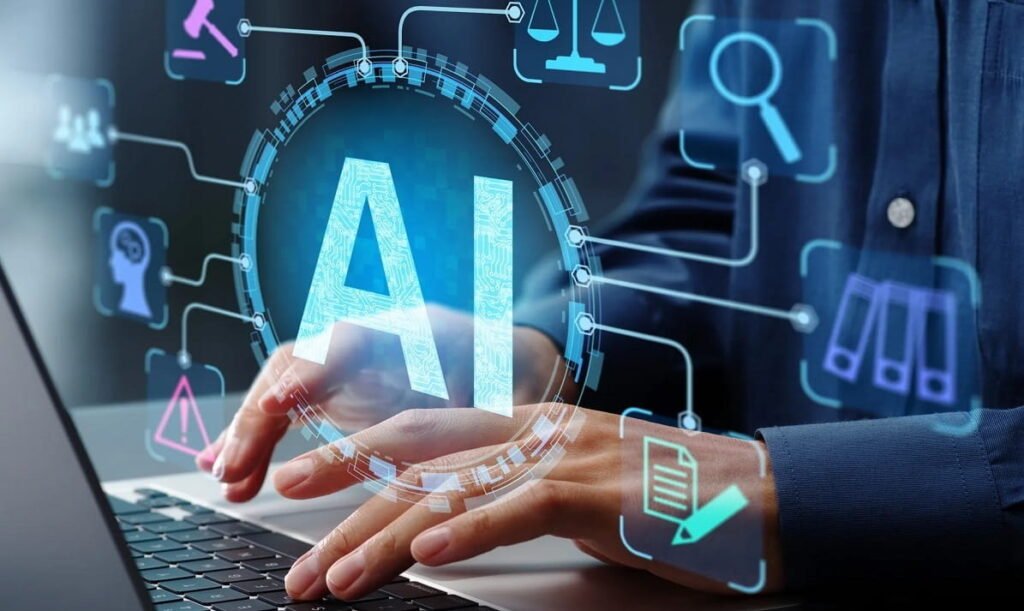
B) Artificial intelligence is changing traditional engineering jobs: Artificial intelligence (AI) is changing how software is developed, tested, maintained and deployed. Some traditional entry-level activities are increasingly automated or assisted by AI tools. This does not mean software engineers will disappear. Instead, employers increasingly need engineers who can:
| Design and develop complex software systems |
| Build and deploy AI-powered applications |
| Work with cloud computing and large datasets |
| Identify cybersecurity risks |
| Solve real-world business and technical problems |
| Understand how to integrate AI into existing systems |
The difference is becoming clearer: knowing how to write code is not the same as knowing how to engineer a complete solution.
C. New industries are creating alternative opportunities: While traditional IT services face hiring challenges, other technology-driven sectors are expanding their capabilities.
| Semiconductor Engineering | Semiconductor engineering is the branch of engineering that focuses on the design, development, fabrication, testing, and improvement of semiconductor devices and integrated circuits (microchips). (VLSI, semiconductor manufacturing, embedded systems and testing) |
| Electric vehicles and battery technology | Modern Electric Vehicle (EV) battery technology is dominated by Lithium-Ion (Li-ion) chemistry, which provides a balance of high energy density, lightweight design, and long lifespan. (EV design, battery management systems, charging infrastructure and power electronics) |
| AI and robotics | Artificial intelligence (AI) and Robotics are distinct fields that merge to create smart, autonomous machines. Robotics builds the physical body, mechanics, sensors, and actuators that interact with the physical world. Artificial Intelligence acts as the digital brain, providing algorithms for reasoning, learning, perception, and decision-making. (Machine learning, automation, intelligent machines and industrial robotics) |
| Renewable energy | Renewable energy comes from natural sources that replenish themselves faster than humans consume them, producing lower or zero carbon emissions compared to fossil fuels. (Solar engineering, power systems, energy storage and smart grids) |
| Cybersecurity | Cybersecurity is the practice of protecting systems, networks, programs, and data from digital attacks, theft, or unauthorised disruption. (Network security, digital infrastructure, cloud security and threat intelligence) |
A September 2026 report by The New Indian Express highlighted a potential shortage of 2.5-3 lakh semiconductor professionals in India by 2027, alongside skill shortages in electronics, renewable energy and electric mobility. These are projected shortages, not guaranteed vacancies for fresh graduates. India’s semiconductor policy initiatives are also aimed at strengthening chip design, manufacturing and packaging capabilities.
2. Which Engineering Branches Should Students consider in 2027?
Students should evaluate engineering branches based on their interests, aptitude, industry demand and the quality of the college.
| Engineering branch | Emerging career areas |
| Computer Science Engineering | Software, AI applications, cloud, systems |
| AI and Machine Learning | AI development, ML engineering, automation |
| Electronics and Communication | Semiconductor, VLSI, embedded systems |
| Electrical Engineering | EVs, power systems, renewable energy |
| Mechanical Engineering | Robotics, industrial automation, manufacturing |
| Cybersecurity | Network security, cloud security, digital forensics |
| Data Science | Data engineering, analytics, machine learning |
| Chemical Engineering | Battery materials, pharmaceuticals, process industries |
| Civil Engineering | Infrastructure, smart cities, construction technology |
An important consideration: Students should not choose AI and Machine Learning simply because it is a popular specialisation. A strong foundation in mathematics, programming, algorithms and computer science is essential.
Similarly, Electronics and Communication Engineering can offer pathways into semiconductor design, but students need specialised training and practical exposure.
3. What does the employability data tell us?
Despite concerns regarding layoffs, engineering remains a key pathway for entering the Indian workforce. According to the India Skills Report 2026, engineering graduates recorded 70.15% employability, while Computer Science and IT graduates recorded 80% and 78%, respectively. The report also highlighted the growing relevance of AI, machine learning, data analytics and automation.
The data suggests that engineering has not lost its relevance. However, employability and actual job availability are two different things. A student can be technically employable but still face competition for a limited number of vacancies.
4. Should students choose CSE or explore other engineering branches?
This is one of the most important decisions for students entering college in 2027. The traditional preference for Computer Science Engineering may continue, but students should also consider Electronics, Electrical, Mechanical, Civil and interdisciplinary engineering.
For example:
| A student interested in mathematics and programming may explore CSE, AI or Data Science. |
| A student interested in hardware and electronics may consider ECE, VLSI or semiconductor engineering. |
| A student interested in automobiles may explore mechanical engineering with EV specialisation. |
| A student interested in energy may consider electrical engineering and renewable energy. |
| A student interested in industrial systems may explore robotics, automation and mechatronics. |
The objective should be to build a career around genuine technical interest rather than simply following the most popular branch.
5. What is the future of engineering in India?
The future of engineering in India is shifting rapidly toward interdisciplinary innovation, emerging tech integration, and sustainability, moving away from rigid, traditional branch boundaries. India’s engineering ecosystem is expected to be influenced by several developments:

| Semiconductor manufacturing and chip design. |
| Artificial intelligence and machine learning. |
| Electric mobility and battery manufacturing. |
| Defence technology and aerospace. |
| Renewable energy and smart infrastructure. |
| Robotics and industrial automation. |
| Cybersecurity and cloud computing. |
However, industry growth does not automatically translate into employment for every engineering graduate. The availability of jobs will depend on investments, company expansion, technical capabilities and the ability of educational institutions to prepare students for industry requirements.
The bigger challenge for Indian engineering colleges will be to move beyond traditional classroom teaching and develop industry-ready graduates.
Conclusion: Is engineering worth pursuing in 2027?
Engineering is not becoming irrelevant because of IT layoffs or artificial intelligence. Rather, the profession is undergoing a transition. The traditional model of obtaining a BTech degree, learning basic programming and expecting a high-paying IT job through campus placement is becoming less dependable.

The next generation of engineers will need stronger technical foundations, interdisciplinary knowledge, practical experience and the ability to work alongside AI.
For students who genuinely enjoy technology, mathematics, innovation and problem-solving, engineering can remain a meaningful educational and career pathway. The real question is not whether students should stop studying engineering because of layoffs. It is whether engineering education in India is evolving quickly enough to prepare them for the jobs of tomorrow.
Also Read: JEE Main 2027 Registration: NTA Issues Guidelines for DigiLocker and Re-KYC
