QS Asia University Rankings 2027: India has strengthened its position in the Asian higher education landscape, adding 34 new institutions to the QS World University Rankings: Asia 2027. However, the latest rankings have brought mixed news for the country’s higher education sector, as all six of India’s highest-ranked universities have slipped from their previous positions.
According to the latest rankings released by global higher education analyst Quacquarelli Symonds (QS) on November 3, 2026, India now has 325 universities in the rankings, compared with 294 in the previous edition. This makes India the second most represented higher education system in Asia, after Mainland China. Despite the increase in the number of participating institutions, India’s leading universities are facing growing competition from universities across Asia.
The decline at the top also raises questions about academic reputation, research impact, internationalisation and the global competitiveness of Indian higher education institutions.
IIT Delhi Remains India’s Highest-Ranked University
The Indian Institute of Technology Delhi (IIT Delhi) remains India’s highest-ranked institution in the QS Asia University Rankings 2027. However, it has dropped seven places, moving from 59th position in 2026 to 66th in 2027.
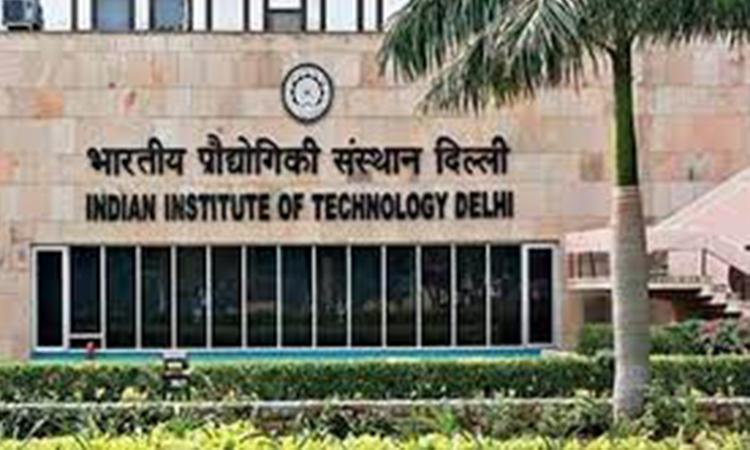
The Indian Institute of Science Bengaluru (IISc Bengaluru) ranks second among Indian institutions, but its regional ranking has slipped from 64th to 79th. Indian Institute of Technology Bombay (IIT Bombay) has fallen from 71st to 83rd, while Indian Institute of Technology Madras (IIT Madras) has dropped from 70th to 85th. Indian Institute of Technology Kharagpur (IIT Kharagpur) and Indian Institute of Technology Kanpur (IIT Kanpur) have also experienced declines, moving from 77th to 90th and 97th, respectively. The University of Delhi has also moved outside Asia’s top 100, falling from 95th to 106th position.
QS Asia University Rankings 2027: Top Indian Universities
| University | QS Asia 2027 | QS Asia 2026 |
| IIT Delhi | 66 | 59 |
| IISc Bangalore | 79 | 64 |
| IIT Bombay | 83 | 71 |
| IIT Madras | 85 | 70 |
| IIT Kharagpur | 90 | 77 |
| IIT Kankpur | 97 | 77 |
| Chandigarh University | 104 | 109 |
| University of Delhi | 106 | 95 |
| IIT Guwahati | 120 | 115 |
| IIT Roorkee | 124 | 114 |
| JNU Delhi | 128 | 130 |
| LPU | 154 | 187 |
| VIT Vellore | 156 | 156 |
| BITS Pillani | 161 | 154 |
| OP Jindal Global University | 165 | 163 |
| Symbiosis International | 175 | 200 |
| Shoolni University | 177 | 159 |
| Amity University | 181 | 187 |
| Jamia Millia Islamia | 183 | 197 |
| UPES Dehradun | 183 | 163 |
| Manipal Academy of Higher Education | 195 | 206 |
India now features 21 universities in Asia’s top 200, up from 20 in the previous edition, according to the newly released QS World University Rankings 2027.
71% of Indian Universities Record a Decline
One of the most significant findings in the QS Asia World University 2027 rankings is the decline in the positions of a large proportion of Indian universities. According to the rankings analysis, approximately 71% of Indian universities recorded a fall in their positions, while 18% improved and 11% maintained their rankings.
However, a decline in ranking does not necessarily mean that an institution’s academic performance has deteriorated. QS has pointed out that two-thirds of Indian universities that dropped in the rankings actually improved their overall scores.
This distinction is important because university rankings are comparative. An institution can improve its performance but still lose positions when competing universities improve at a faster rate.
Chandigarh University, LPU and Symbiosis Improve Their Positions

While India’s leading IITs have experienced setbacks, several universities have demonstrated encouraging progress.
A) Chandigarh University has improved its position in the QS Asia University Rankings 2027 from 109th to 104th, marking its best-ever ranking.
B) Lovely Professional University (LPU) has recorded a significant improvement, moving from 187th to 154th.
C) Symbiosis International University has also advanced from 200th to 175th.
Other institutions showing positive movement include:
| Jawaharlal Nehru University | 130th to 128th |
| Jamia Millia Islamia | 197th to 183rd |
| Manipal Academy of Higher Education | 206th to 195th |
| IIT (BHU) Varanasi | 237th to 219th |
| IIT Hyderabad | 270th to 251st |
| Chitkara University | 325th to 263rd |
IIT (ISM) Dhanbad: 424th to 373rd. These improvements indicate that India’s higher education growth is not limited to its traditional flagship institutions. Several private and public universities are also strengthening their academic and research profiles.