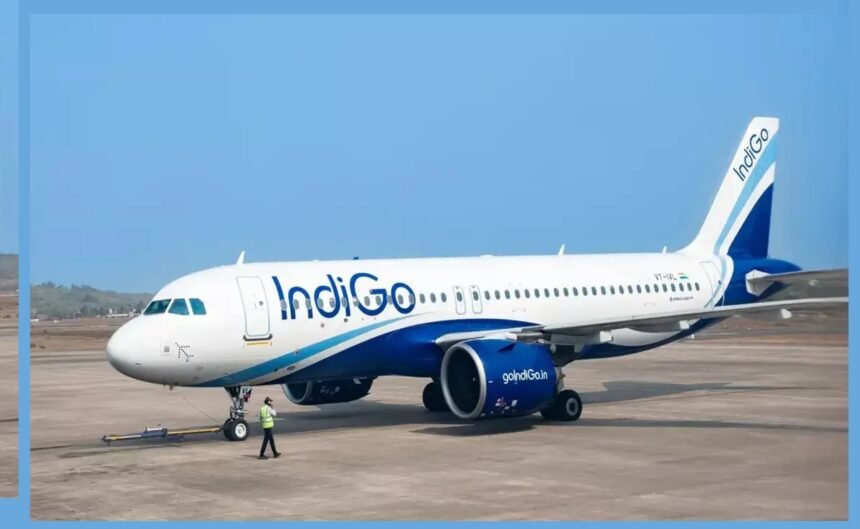
When IndiGo Airlines launched in 2006, few expected that a budget carrier with a small fleet would transform India’s aviation market. Today, it dominates the domestic skies, commands one of the world’s largest aircraft orders, and has become a case study in discipline, scale, and relentless focus.
IndiGo Airlines The Beginning: A Lean Idea Takes Flight
IndiGo Airlines was founded in 2005 by Rahul Bhatia of InterGlobe Enterprises and Rakesh Gangwal, former CEO of US Airways. Their strategy was simple: create a low-cost airline that focused on punctuality, efficiency, and a single aircraft type. No frills, no distractions, just predictable, on-time service. The airline placed a large order for 100 Airbus A320S even before its first flight. At the time, this seemed risky. In retrospect, this was a masterstroke that locked in supply and set Indigo up for rapid growth.
Years of Growth: Accuracy as a Brand
IndiGo Airlines began operations in August 2006 with a single flight from Delhi to Imphal via Guwahati. It grew rapidly because it stuck to its playbook.
• A single aircraft family to simplify maintenance and training
• Fast turnaround to keep planes airborne
• Strong cost controls to keep fares low
• A strong focus on on-time performance, which became the airline’s hallmark While competitors oscillated between expansion and losses, IndiGo grew quietly and steadily. Passengers who wanted to be informed got it. Business travellers got it. Young travellers got it. By 2012, IndiGo Airlines had become India’s largest domestic airline by market share.
Facing Ups and Downs
The airline’s ascent wasn’t without challenges. Rising fuel prices, a weak rupee, and fierce competition tested the entire industry. IndiGo Airlines faced public scrutiny over customer service and crew conditions. It also faced tough questions during leadership changes, especially after Rakesh Gangwal’s departure amid boardroom discord.
Nevertheless, the airline continued to grow because its fundamentals remained strong. It kept costs tight, booked aircraft in advance, and protected its reliability metrics. The market rewarded that stability.
From Domestic Leader to Global Ambition

In recent years, IndiGo has expanded beyond India. It now flies to over 30 international destinations in the Middle East, Southeast Asia, Central Asia, and Europe. It has introduced the long-range A321neo and ordered the A321XLR, which will enable nonstop routes within Europe.
Its most significant move came in 2023 when it ordered 500 Airbus aircraft, the largest single order in aviation history at the time. This solidified IndiGo’s long-term expansion plans and signalled the airline’s intention to become more than just a domestic powerhouse.
IndiGo Airlines Today: A Big Company Still Focused on the Basics
IndiGo controls more than half of India’s domestic aviation market. It operates one of the world’s newest fleets (IndiGo’s fleet size is rapidly growing, reaching over 400 aircraft) and is rapidly adding planes. Its brand still relies on punctuality, clean cabins, and predictable service.
As India becomes one of the fastest-growing air travel markets, IndiGo’s scale gives it an edge. The next challenge is to grow without losing what made it successful. This means improving service quality, expanding international routes, and advancing in an increasingly competitive global environment.
Why IndiGo’s Story Matters
IndiGo’s growth reflects the growth of India’s middle class and the country’s move towards better connectivity. Millions of first-time flyers have taken to the skies because IndiGo Airlines has made flying easy and reliable. From one aircraft in 2006 to hundreds today, the airline’s story is one of meeting demand with discipline. It’s still writing its next chapter, but the message so far is clear: Consistency can be a competitive superpower.
Also Read: Microsoft Announces $17.5 Billion AI and Cloud Investment in India