
In recent weeks, Chandigarh has become the centre of a troubling pattern of financial Fraud. What first appeared like isolated fraud cases now show a repeated pattern: putting government money into fixed deposits, creating fake documents to hide transactions, and using ‘shell companies’ to use funds from the government system. This chain of financial fraud cases, uncovered across Chandigarh and Haryana and involving IDFC First Bank, AU Small Finance Bank, and Kotak Mahindra Bank, reveals a highly structured methodology.
- Multiple Factors Were Behind the Financial Fraud
- Pattern Behind the Chandigarh Financial Fraud Cases
- Immediately After, the Investigation Widened
- Bogus Fixed Deposits as a Cover
- This is no Longer an issue Concerning the Chandigarh Municipal Corporation Alone.
- Arrests may make headlines, but the real challenge lies in institutional reform.
At its core lay a network of collusion that included bank officials, government employees, and private middlemen who exploited systemic loopholes. within the processes governing the management of government funds and Fixed Deposit (FD) schemes.
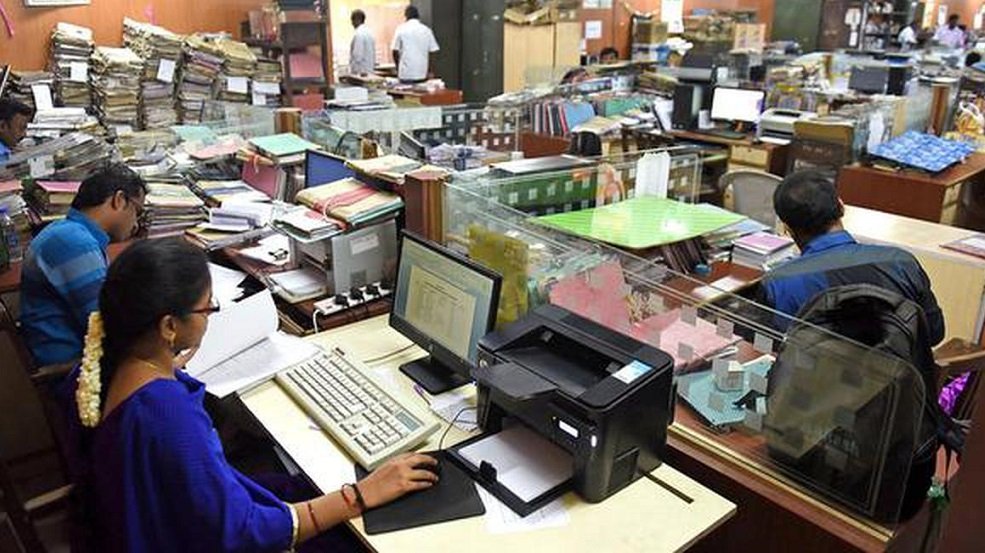
Multiple Factors Were Behind the Financial Fraud
First, there was collusion across sectors. This involved government officials from whom the funds originated, bank officials who were custodians of the deposited funds, and external facilitators, private companies that routed the fraudulently siphoned money into real estate investments.
Second, the fraud relied on paperwork manipulation, trust-based systems, and institutional gaps. Also, Fixed Deposits (FDs), typically considered safe, became vulnerable due to manual controls, lack of real-time tracking, and dependence on bank confirmations.
Pattern Behind the Chandigarh Financial Fraud Cases
The names of the institutions are changing, but the nature of the fraud remains largely the same. The latest controversy erupted when the Chandigarh Municipal Corporation discovered that Fixed Deposit Receipts (FDRs) worth over ₹116 crore linked to funds transferred from the Smart City Project did not exist in the bank’s official records. Investigators state that fake FDRs were fabricated, while the actual government funds were diverted elsewhere.
Immediately After, the Investigation Widened
The arrest of Nalini Malik, the Chief Financial Officer of Chandigarh Smart City, strengthened the suspicion that this fraud wasn’t just about fake papers. Police claim that public money was moved through fake channels and later connected to private firms created only to get and hand out the cash.
Bogus Fixed Deposits as a Cover
A fixed deposit normally suggests safety, long-term planning, and low risk. That is exactly why it becomes useful in fraud. In these Chandigarh-linked cases, fake FDRs allegedly served two purposes:
| They created the appearance that money was safely invested. |
| They delayed detection because official records appeared complete on paper. |
The financial fraud surfaced only when government bodies tried to encash or transfer these deposits and found that the money was either missing or never formally locked into deposits at all.
This is no Longer an issue Concerning the Chandigarh Municipal Corporation Alone.
The Haryana government has already initiated the process of handing over the investigation into the ₹590 crore bank-related financial fraud case to the CBI; this step was taken after similar concerns emerged regarding state-related accounts operated through the same banking network in Chandigarh.
Arrests may make headlines, but the real challenge lies in institutional reform.
Unless audit systems become faster, bank verification becomes independent, and every large public deposit is digitally cross-checked in real time, the same method can return under different names. Because in Chandigarh right now, the scandal is not just about missing crores. It is about how easily official trust can be manufactured on paper.
Also Read: Amid Rising AI Investments and Cost Pressures, Oracle Prepares to Cut Thousands of Jobs