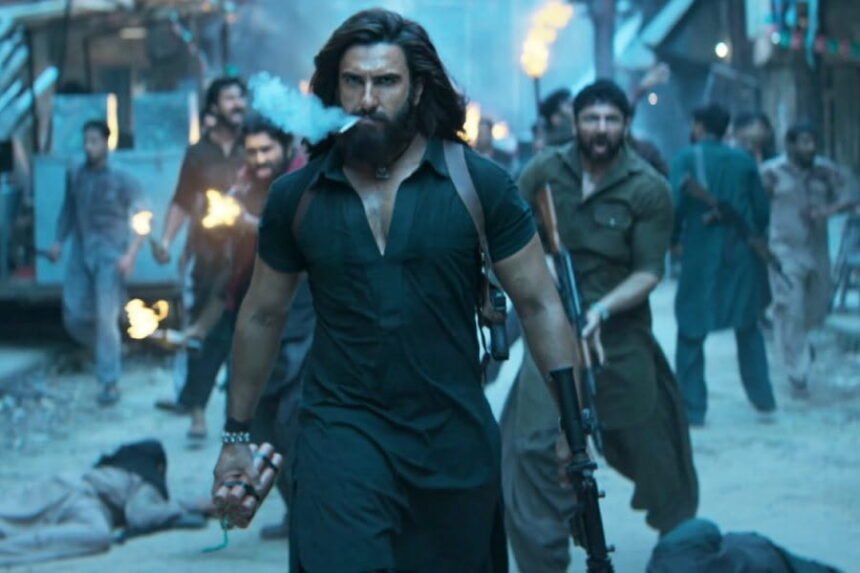
Ranveer Singh’s Connection to Pakistan: Directed by Aditya Dhar and generating significant buzz, the film Dhurandhar: The Revenge has emerged as one of the most talked-about Hindi films of the year. The movie has garnered an overwhelming response from audiences, a success attributed not merely to its large-scale action sequences and espionage-driven plot, but also to the masterful way it weaves a fictional narrative together with sensitive geopolitical themes concerning India and Pakistan.
According to reports, the film has captured considerable headlines thanks to its expansive scope, its substantial runtime, and its impressive opening-day box office collections in India.
Adding a new dimension to audience curiosity is a personal detail concerning the film’s lead actor, Ranveer Singh. As viewers watch him portray a high-risk intelligence agent operating deep behind enemy lines, many are now discovering that his own family history is, in fact, deeply intertwined with the region that constitutes present-day Pakistan.
Ranveer Singh’s Family Roots Lie in Present-Day Pakistan
According to reports surfacing around the time of the film’s release, Ranveer Singh’s grandmother, Chand Burke, was born in undivided Punjab prior to the Partition of the country. The village where her family originally resided now falls within the territorial boundaries of Pakistan. Following the Partition, she relocated to Mumbai and subsequently forged a career in Indian cinema; through the sheer strength of her acting prowess, she earned considerable acclaim and carved a distinct niche for herself in both Hindi and Punjabi films.
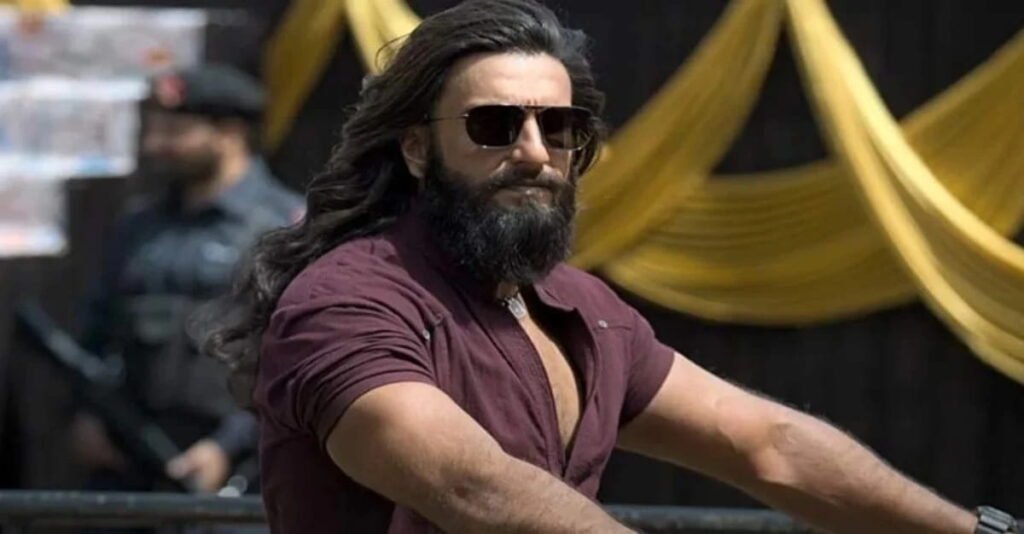
This familial background becomes particularly fascinating as it offers a glimpse into the historical geography that has served as the foundational bedrock for many of the narratives depicted in contemporary Indian political cinema. For today’s younger generation, the fact that a major Bollywood star has ancestral ties across the border serves as a poignant reminder of just how deeply the Partition of the country impacted the lives of families living on both sides of the frontier.
Why does this connection seem relevant to ‘Dhurandhar: The Revenge’?
In this film, Ranveer Singh portrays the character of Hamza Ali Mazari, an intelligence agent who infiltrates a dangerous territory linked to a Pakistan-based terror network. The narrative extends the espionage framework established in the first film, transforming it into a revenge-driven mission that involves infiltration, covert operations, and strategic counter-measures.
Given that the film’s storyline revolves directly around the India-Pakistan conflict, audience attention has naturally gravitated toward the intriguing contrast between Ranveer’s on-screen persona and his family’s own historical ties to that very region. Within the entertainment sphere, this has emerged as one of the most widely shared narratives surrounding the film’s release.
Curiosity regarding the film has been observed across the border as well.
Interestingly, the film has sparked a conversation within Pakistan itself. Although reports indicate that the movie has not been officially released there, videos and social media posts have surfaced showing pirated copies being screened in cities such as Lahore. Several clips circulating online have elicited reactions from users on both the Indian and Pakistani sides; many have even wryly remarked on how a politically sensitive espionage thriller has, quite unofficially, managed to cross the border.
This cross-border curiosity has further amplified the film’s popularity, making this Pakistan-related facet a significant part of the broader online discourse surrounding the movie.
Cinema, Memories, and Public Interest
For many viewers, this is not merely a trivial matter concerning celebrities. It illustrates how cinema often becomes intertwined with family history, themes of displacement, and identity. A star like Ranveer Singh, known for his electrifying performances, now stands at the centre of a narrative where his personal lineage and political imaginings intersect in unexpected ways.

As the film ‘Dhurendhar: The Revenge’ continues its theatrical run, that real-life dimension linked to Pakistan will likely remain a part of public discourse, and in doing so, it will lend even greater depth to a film that is already making headlines due to its grand scale, controversies, and box-office performance.